The Most Valuable Cars in the Le Mans M24 Museum
The old 24 Hours of Le Mans Museum became something much larger in 2026. M24 – Motorsport Museum opened on 28 May with 8,600 m², more than 120 genuine working vehicles, six disciplines and 4,667 scale models representing every Le Mans starter since 1923. It passed 100,000 visitors within its first two months.
The headline cars now range from the oldest surviving Le Mans winner to a Lewis Hamilton Formula 1 car. Which are the most valuable? As with the Spa-Francorchamps museum, the honest answer starts with what cannot be priced.
How we built the list
We started with M24’s current collection pages, then separated museum objects from temporary loans. For each car we looked for a public sale of the same model or the nearest defensible relative.
Four rules keep the numbers honest:
- A museum label does not establish ownership or saleability.
- The display car’s chassis is named only where an official source names it.
- A sold result is evidence; an estimate or unsold lot is not.
- No close comparable means no invented value.
1. Lewis Hamilton’s Mercedes W09
M24 names Lewis Hamilton’s Mercedes W09 among its current star exhibits, associating it with his fifth world title in 2018. The museum does not publish the chassis number, ownership or loan term.
The market comparison is Hamilton’s 2013 Mercedes-AMG Petronas F1 W04, chassis F1W04-04. It won the Hungarian Grand Prix and sold for $18,815,000 at RM Sotheby’s Las Vegas sale on 17 November 2023.
2. The 1924 Le Mans-winning Bentley 3 Liter
This is the car for which a model-level comparison is least useful. John Duff and Frank Clement drove number 8 to victory in 1924, giving Bentley the first of its five wins that decade. M24 presents it as the oldest surviving Le Mans winner and says work before its centenary confirmed the chassis’ authenticity.
A normal 1924 Bentley 3 Liter tourer, chassis 589, sold for £189,750 including premium at Bonhams Goodwood in September 2018. That tells us what another early Bentley sold for. It tells us almost nothing about the only surviving winner from the second running of Le Mans.
3. The 1986 Dakar-winning Porsche 959
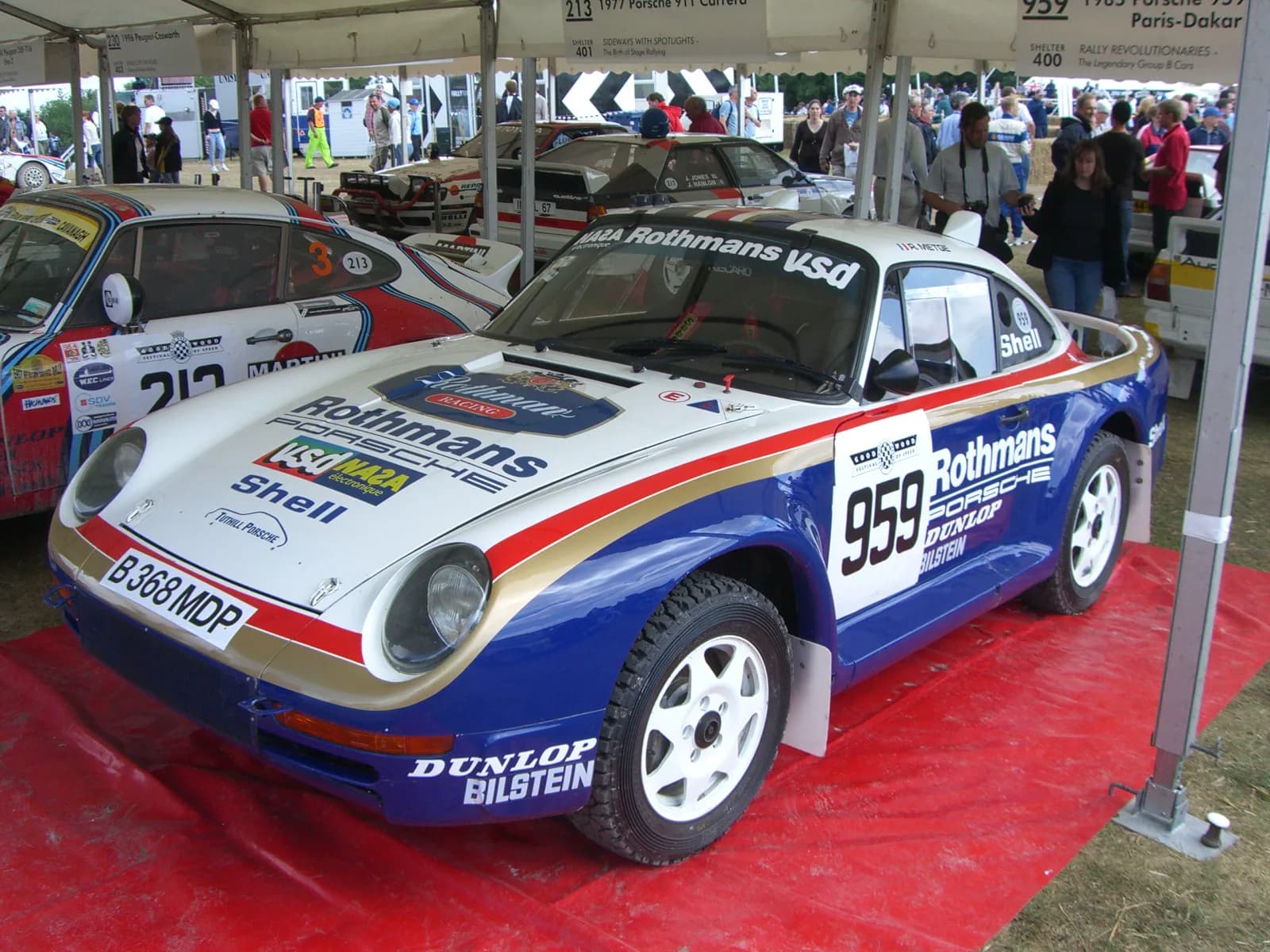
The Porsche 959 is a loan from the Porsche Museum, not proof of M24 ownership. Porsche retains all three works cars from the 1986 Paris–Dakar, including the René Metge and Dominique Lemoyne winner, which it preserves substantially unrestored.
A different Dakar 959, 1985 chassis 010015, sold for $5,945,000 at RM Sotheby’s Porsche 70th Anniversary sale in October 2018. It is the strongest public benchmark for the tiny group of factory rally-raid 959s.
4. Maserati 250F Tipo 2 V12
M24’s 250F is the rare V12 variant. The museum says only three were made and only one raced in a Grand Prix, with Jean Behra at Monza in 1957. It does not publish the display chassis, so it should not be confused with Fangio’s six-cylinder championship cars.
The public benchmark is one of those materially different six-cylinder cars: Maserati 250F “offset” chassis 2525, which sold for $4,620,000 at Gooding & Company in August 2014.
5. Ferrari 712 Can-Am, chassis 1010
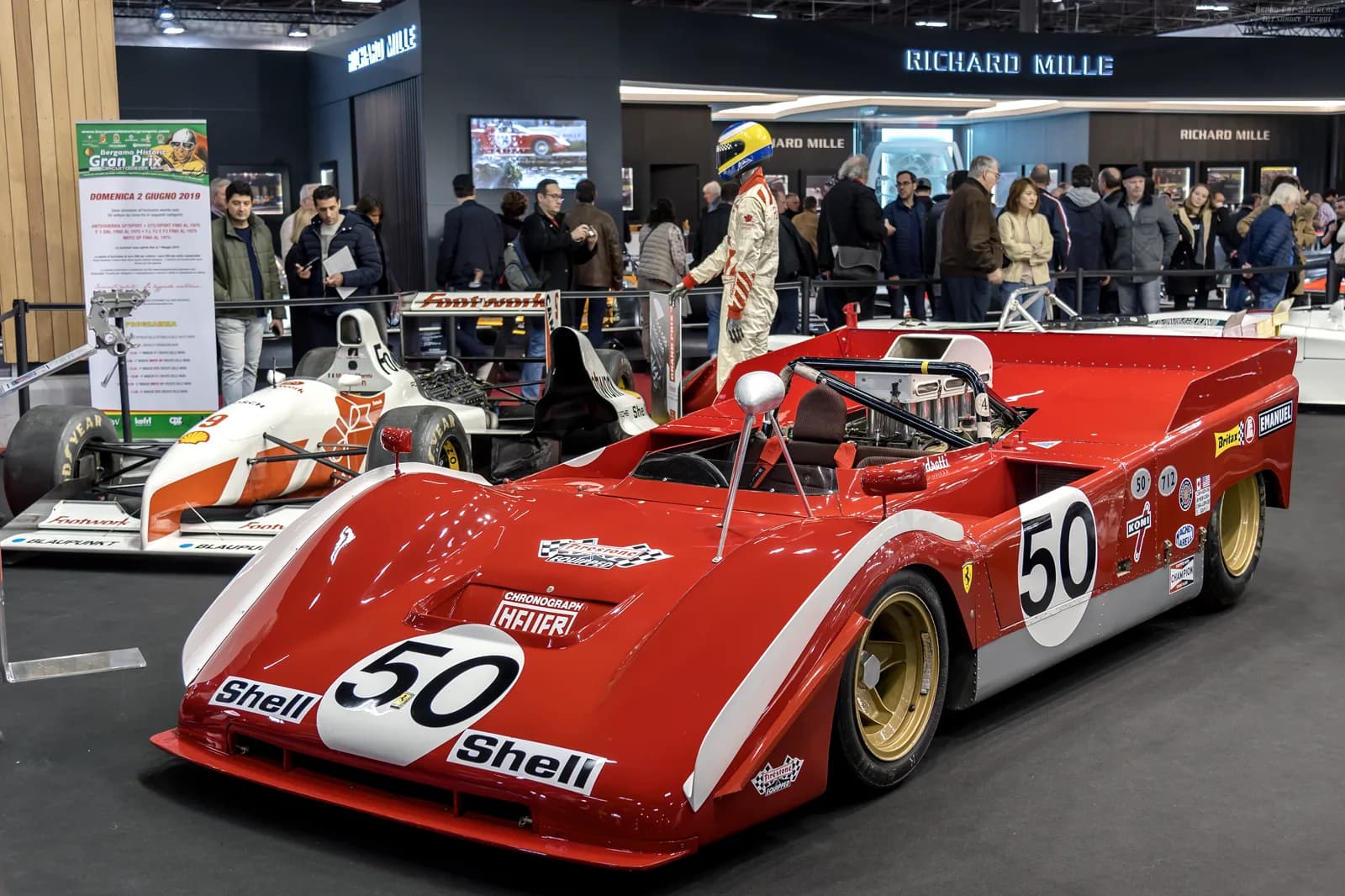
The 712 is unique. Ferrari identifies it as chassis 1010, evolved from a 512 S and 512 M into a 6.86-liter V12 Can-Am car. It won on its debut at Imola in 1971. “Same model” auction evidence does not exist.
The related result is Ferrari 512 M chassis 1024, sold for €2,090,000 by RM Auctions at Maranello in May 2008. It gives context for the 512 family, not a price for the one-off 712.
6. Ferrari 166 MM
Ferrari’s first Le Mans appearance ended with victory in 1949. M24 tells that story beside a Ferrari 166 MM, but it does not identify the display car’s chassis. It must not quietly become winner 0008M in a caption; Ferrari identifies that winner as privately owned.
Same-model chassis 0024M sold for $1,870,000 at RM Auctions Arizona in January 2011.
7. Lancia Stratos Group IV
The Stratos was designed around rallying rather than adapted from a family sedan. It took three consecutive manufacturers’ titles from 1974 to 1976. M24 does not publish the chassis or works history of its displayed Group IV car.
A Group 4-specification Stratos, chassis 829 ARO 001827, sold for €312,500 including premium at Bonhams Paris in February 2017. A genuine works winner would occupy a different market; a later competition conversion can occupy a lower one.
8. Mazda 787B, chassis 04
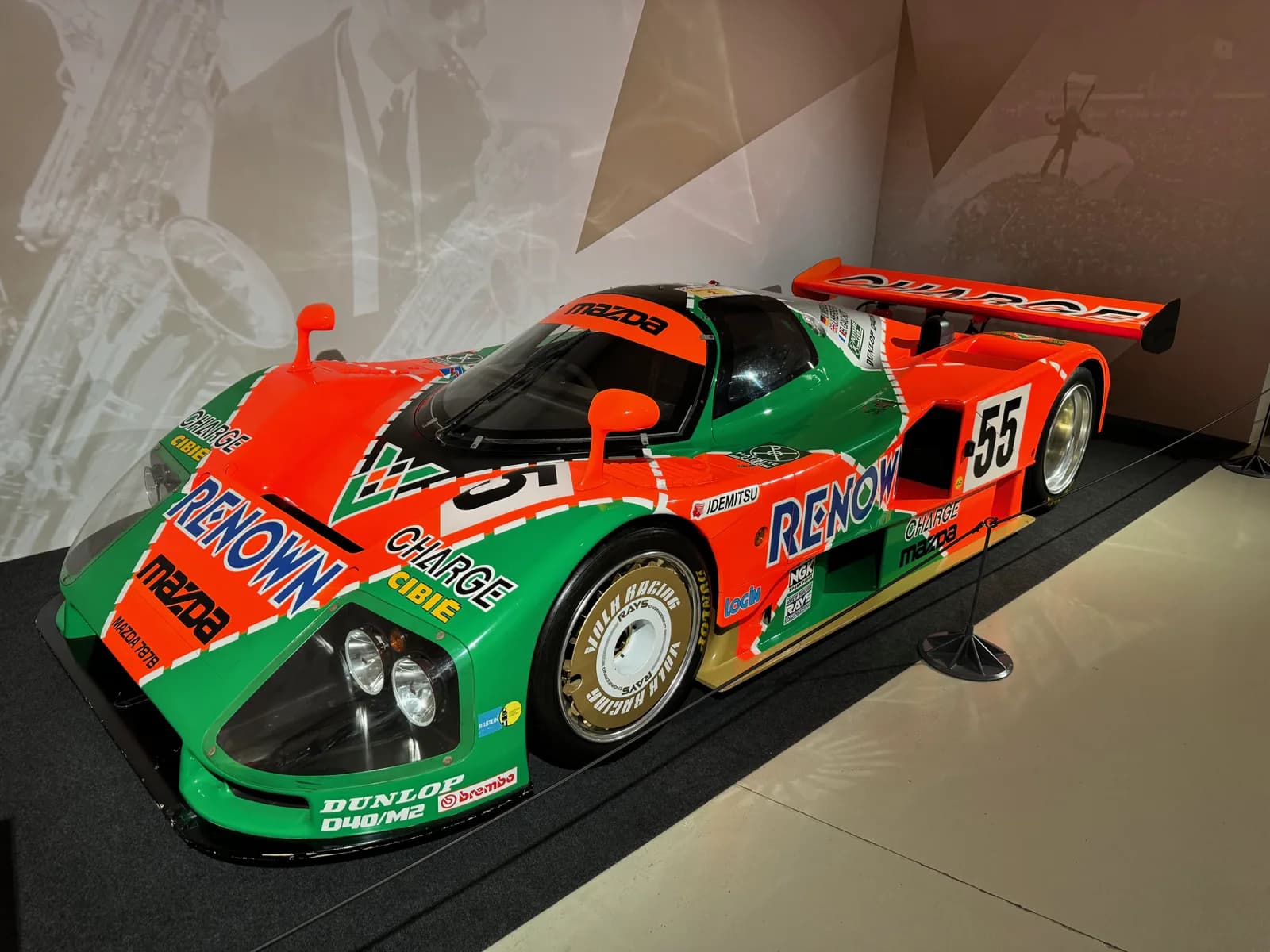
The orange and green Mazda is the car most visitors will photograph—and the easiest one to misdescribe. The ACO identifies it as chassis 04, donated by Mazda with presentation mechanicals. It is non-operational and painted like the 1991 winner. The winning chassis, 787B-002, remains with Mazda in Hiroshima.
No credible public sale of a competition 787B was found. Search results often lead to scale models, memorabilia or unsourced claims. The right figure is therefore no figure.
What happened to the 250 GTO and the other centenary stars?
The Ferrari 250 GTO, Bentley Speed Six, Ford GT40s and other headline winners gathered for the 2023 centenary were part of a temporary exhibition that closed on 2 July 2023. Unless M24 publishes newer evidence, they should not be represented as current holdings.
That distinction is part of the fun rather than a disappointment. A living motorsport museum changes because cars return to owners, run at events and enter new exhibitions. M24’s visible workshop exists to keep operational cars operational.
So what is the collection worth?
Adding these comparables would be meaningless. The total would mix a different Formula 1 chassis, an ordinary Bentley tourer, an unrelated Maserati specification, a 512 M standing in for a unique 712 and a Mazda with no market evidence.
The useful conclusion is qualitative:
- modern championship Formula 1 cars can be eight-figure assets when a race-winning chassis is publicly saleable;
- genuine Le Mans winners sit above ordinary examples of the same model;
- unique factory prototypes have no repeatable market;
- presentation cars can be culturally important without sharing the value of the winner they resemble.
Before you travel
M24 is at 9 Place Luigi Chinetti, Le Mans. Current visitor information lists daily opening from 10:00 to 19:00 from May through September and 10:00 to 18:00 from October through April, with closure on 25 December and 1 January. Check again before traveling, especially during the 24 Hours and Le Mans Classic.
Allow at least two hours. The museum suggests about 1 hour 45 minutes, but the model display, workshop and non-Le Mans galleries reward a slower visit.
If you want to own something similar
Most museum-grade winners will never be public inventory. Customer and privateer cars do trade.
- Obtain the chassis number and compare it with period entry lists.
- Separate “painted like” from “is.”
- Confirm whether a car runs, what mechanicals it contains and what spares transfer.
- Read the FIA HTP and historic papers guide.
- Use the used race car inspection checklist even when provenance is the headline.
Browse historic race cars for sale, sports prototypes and the wider race car market. For the race rather than the museum, see Le Mans winners, sister cars and auction values.
Sources
Museum and collection
- ACO: opening of M24
- M24 official collection
- M24 practical information
- ACO: identity of Mazda 787B chassis 04
- Ferrari: 712 Can-Am
- Porsche: preservation of the 1986 Dakar 959s
Public sale comparables
Frequently asked questions
What is the M24 museum at Le Mans?
M24 – Motorsport Museum is the expanded successor to the 24 Hours of Le Mans Museum. It opened on 28 May 2026 with 8,600 m² of exhibition space, more than 120 working vehicles and displays covering six motorsport disciplines.
What is the most valuable car in the Le Mans museum?
There is no public appraisal of the collection. The largest related public result in this guide is $18,815,000 for Lewis Hamilton’s 2013 Mercedes F1 W04, used as a market comparison for the museum’s W09. It is a different car. The museum’s 1924 Le Mans-winning Bentley may have no meaningful open-market equivalent.
Is the Mazda 787B in the museum the 1991 Le Mans winner?
No. The ACO identifies the museum car as chassis 04, a non-running presentation car painted like the winner. The winning chassis is 787B-002 and belongs to Mazda’s collection in Hiroshima.
Are all cars in M24 owned by the museum?
No. The display combines collection cars and loans. The 1986 Dakar-winning Porsche 959, for example, is a Porsche Museum loan. Exhibits can rotate.
How long should visitors allow for M24?
M24 recommends roughly 1 hour 45 minutes. Enthusiasts reading the displays and watching the visible workshop should allow at least two hours.