What Is a Spa Six Hours Grid Worth?
At 15:50 on 28 September 2024, eighty historic racing cars were scheduled to start six hours around Spa-Francorchamps. Twenty were entered as Ford GT40s. The rest included Cobras, Lightweight E-Types, Lotus Elans, Mustangs, Porsche 911s and an Aston Martin presented as a DP214. The race ran from daylight into darkness on the 7.004 km circuit.
What was the grid worth while it sat in the paddock? The short answer is roughly £25–40 million. The honest answer is that the same entry list can support anything from £6 million to more than £70 million until somebody reads every chassis plate.
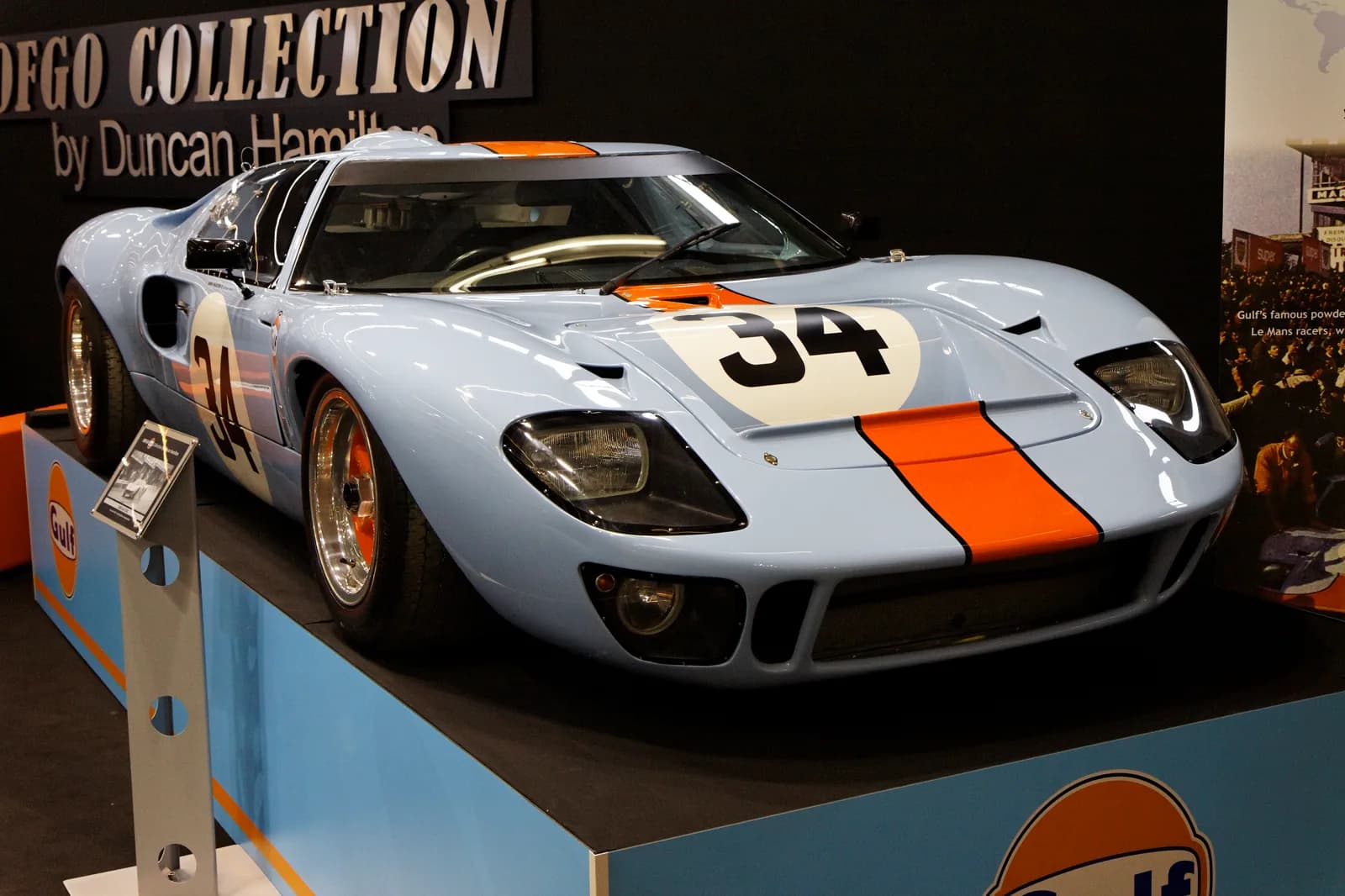
Why use the 2024 race?
The 31st Spa Six Hours supplied a large, varied and documented grid. The official entry list names the models and crews; the published classification records what actually happened.
Dario Franchitti, Marino Franchitti and André Lotterer won in a Ford GT40 after 106 laps in 5:41:57.985. David Hart, Olivier Hart and Nicky Pastorelli were second in another GT40. Gordon Shedden, Ben Barker and Rory Butcher put a Lotus Elan 26R third.
That result is a reminder that this is not a concours parade. Practical value includes whether the car can run for six hours, at night, at Spa, without using its entire season’s rebuild budget.
The problem hidden in the entry list
“Ford GT40” is a model description. It is not a chassis history.
A car can be:
- an original period GT40 with continuous identity;
- a reconstructed period chassis;
- a sanctioned continuation;
- a recent recreation built to Appendix K specification;
- or a modern historic racer whose value is concentrated in its engine, gearbox, preparation and HTP.
All five may be eligible for the same event. They are not five versions of the same financial asset.
The same warning applies to “Cobra,” “Lightweight E-Type,” “Lotus 26R” and “DP214.” An Aston Martin built in the style of DP214 is not one of the works Project cars because the entry list uses those letters.
How the grid breaks down
The 80 entries group approximately as follows:
- 20 Ford GT40s
- 11 Lotus Elans and 26Rs
- 10 Ford Mustangs and GT350s
- 7 Jaguar E-Types
- 6 Porsche 911s
- 5 Cobras and Daytona Coupés
- 3 Austin-Healey 3000s
- 3 TVR Griffiths
- 1 Aston Martin DP214 entry
- 1 Morgan Plus 4 Super Sports
- 13 others, including Ginettas, Falcons, Marcoses, a Gilbern, Triumphs, an MGB, a Galaxie and a Turner
You cannot average ten auction results and multiply by 80. The GT40 group alone may contain most of the grid’s value—or a much smaller share—depending on identity.
GT40: £86,250 or £2,508,000?
The winning model supplies the central calculation.
Documented original GT40 P/1085 sold for £2,508,000 at Gooding & Company in June 2021. A 2008 Southern GT40 recreation, chassis SGT05ZF08331P1075, sold for £86,250 at Bonhams in July 2024.
Both can be excellent machines. Only one carries period Ford GT40 identity.
Lotus Elan and 26R
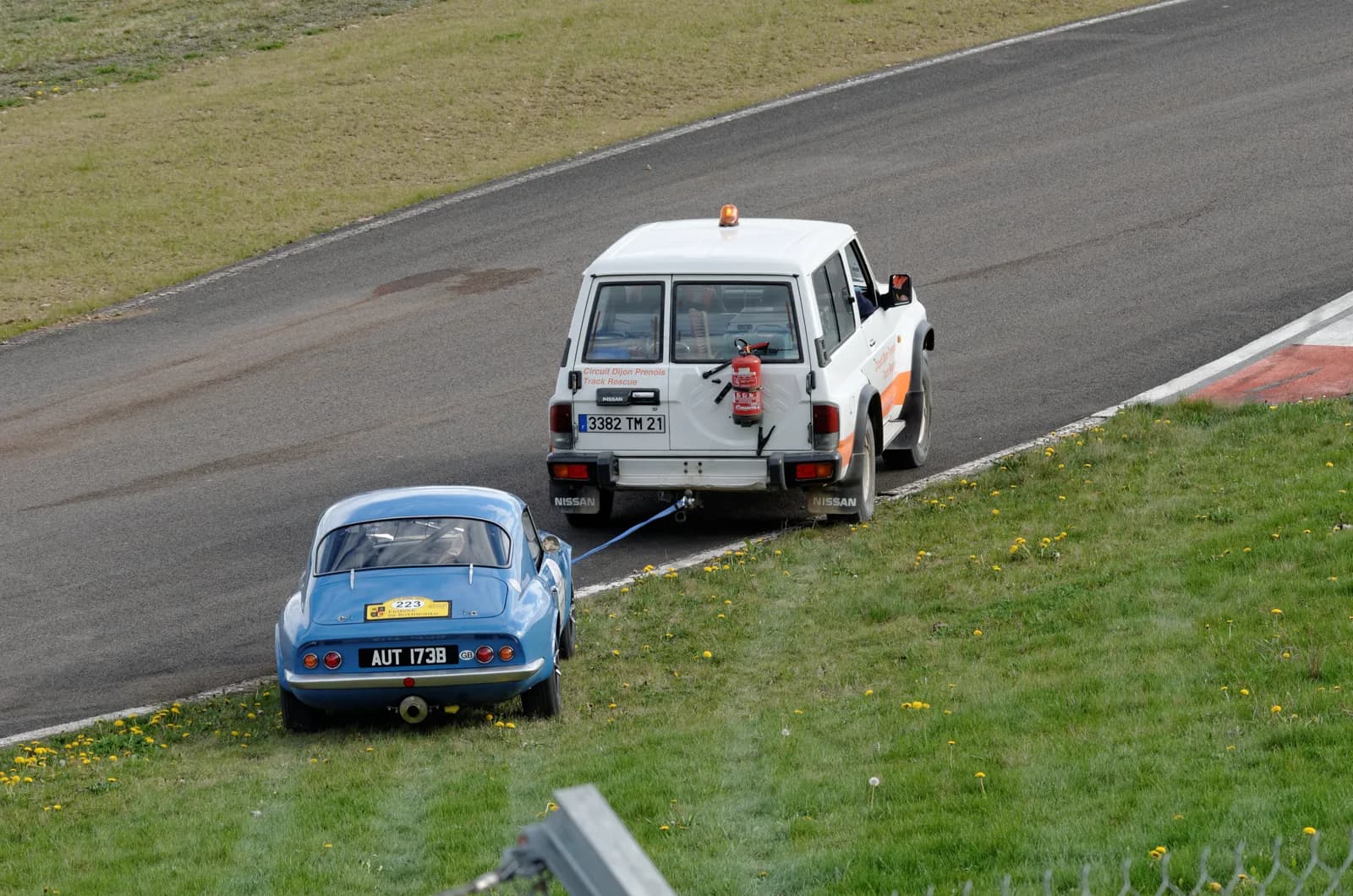
The Elan’s result-to-value ratio may be the best on the grid. A new-chassis Elan built to 26R specification sold for £40,250 at Bonhams in October 2020. Genuine 26R identity and important period history can move a car substantially above that.
We use £40,000–£150,000 as a practical model band, not a claim about any entrant.
Cobra and Daytona Coupé
Bonhams sold factory-prepared competition Cobra CSX 2430 for £1,359,000 in September 2018. A converted road car, continuation or recreation belongs at a fraction of that level.
For the five Cobra/Daytona entries we use a deliberately wide £100,000–£1.36 million-plus band. A genuine Daytona Coupe would break that framework completely, which is why a model description cannot be treated as proof.
Jaguar E-Type and Lightweight
A Lightweight Low-Drag competition recreation by RS Panels sold for £214,300 at Bonhams in September 2012.
That supports a working £200,000–£800,000 range for strong recreations and continuation-style competition cars. A genuine period Lightweight is an entirely different collector asset and would sit far above it.
Aston Martin DP214
The entry list included an Aston Martin DB4 GT DP214. The closest useful sale is a DP214 replica built from DB4/618/R, which sold for £551,666.67 at Bonhams in March 2017.
That oddly precise result is still not a valuation of the Spa entrant. It is an anchor for a documented replica. The entrant’s base chassis, build history and HTP are needed before calling it equivalent.
The supporting grid
The less theatrical cars make the estimate more stable:
- A TVR Griffith 400 sold for $134,400 at Bonhams in 2021, supporting roughly £90,000–£150,000 for the related Griffith group.
- An FIA-prepared Austin-Healey 3000 built to works-rally specification made £89,700 in 2023.
- A genuine Morgan Plus 4 Super Sports made $100,800 in February 2024.
- An HTP-equipped FIA competition Mustang sold for £51,750 in September 2024.
- A 1966 Porsche 911 2.0 SWB FIA coupé sold for €115,000 in February 2024.
These are closer to repeatable historic-racing markets. Preparation, engine hours and spares still create five-figure swings.
Three answers to one question
The competition-hardware floor: £6–10 million
Assume most headline entries are modern recreations, conversions or continuation-style racers. Value them by replacement hardware, preparation and eligibility rather than famous model identity.
This does not mean the cars are cheap. It means a grid of eighty serious historic racers can be less valuable than four original GT40s.
The mixed-provenance estimate: £25–40 million
Assume a meaningful minority of the 20 GT40s and five Cobras carry documented period identity, with the rest valued as high-quality historic racers. This is our headline because it is more plausible than either extreme.
It remains an assumption. We did not inspect ownership files or chassis plates.
The collector-provenance ceiling: about £70 million
Apply original-car values broadly across the GT40 and Cobra contingent. The total quickly reaches roughly £70 million and can move higher.
This is a sensitivity test, not a statement that the grid contained that many originals. It shows what provenance does to the arithmetic.
What the estimate leaves out
Auction price is not race-ready cost.
- recommissioning after a sale;
- engine and gearbox life;
- crack testing and chassis repairs;
- fuel cell, harness and seat dates;
- current HTP and series eligibility;
- spares packages;
- VAT, buyer’s premium, transport and insurance;
- the damage reserve for six hours at Spa.
A collector-original car may be worth more while being less attractive to race. A fresh recreation can be the better tool and the cheaper asset.
How to buy into the grid
- Choose whether you want period identity or maximum track time.
- Ask what the HTP proves—and what it does not.
- Verify the chassis against period records before paying for history.
- Inspect engine hours, gearbox records, safety dates and spares.
- Budget a professional pre-purchase inspection and a first rebuild reserve.
Read the FIA HTP guide, used race car inspection checklist and what drives race car prices. Cars available now appear under historic race cars for sale and the wider race car market.
Sources
Event
Public sale benchmarks
Frequently asked questions
How much was the 2024 Spa Six Hours grid worth?
Our mixed-provenance editorial estimate is roughly £25–40 million. A hardware floor using recreation and prepared-racer values is around £6–10 million, while an unrealistic original-car ceiling can exceed £70 million. Chassis histories are needed for a real appraisal.
Why is the range so wide?
The entry list names models, not identities. Twenty cars were entered as Ford GT40s, but an HTP-eligible recreation may be worth under £100,000 while a documented original GT40 has sold above £2.5 million. Cobra, Lightweight E-Type and Lotus 26R labels create the same problem.
Who won the 2024 Spa Six Hours?
Dario Franchitti, Marino Franchitti and André Lotterer won in a Ford GT40 after completing 106 laps. David Hart, Olivier Hart and Nicky Pastorelli finished second in another GT40; Gordon Shedden, Ben Barker and Rory Butcher were third in a Lotus Elan 26R.
Does an FIA HTP prove a race car is an original period chassis?
No. An HTP certifies that a car complies with an eligible historic specification. It does not by itself prove that the chassis raced in period or owns the history of a famous works car.
Can a Spa Six Hours car be bought and raced immediately?
Sometimes, but purchase price is only the start. Verify HTP validity, engine and gearbox hours, crack testing, fuel-cell and safety dates, spares, noise compliance and eligibility before assuming it is race-ready.