The Porsche Museum’s Greatest Racing Cars — and What They Would Be Worth
The Porsche Museum does not simply hold one example of every famous model. It holds test cars, works winners, engineering prototypes and competition chassis whose individual histories matter more than the names on their tails. Porsche says almost 100 cars are presented in the museum, with regular rotation and special exhibitions. That makes any fixed “most valuable cars on display” list misleading before it begins.
This guide takes a different route. It selects eight racing cars Porsche officially places in its museum or historic collection, identifies the exact chassis where Porsche publishes it, and sets each against a documented public sale. The auction result belongs to the comparable car—not the museum car.
How we chose the cars and prices
The rules are deliberately strict.
- Porsche must document the car in its museum or historic fleet. A photograph alone can show a model but not necessarily establish a chassis.
- We use Porsche’s chassis identification where available. Secondary sources are labeled rather than quietly promoted to factory evidence.
- The benchmark must be a public sold result. Estimates and asking prices are useful context but are not sales.
- The original currency stays visible. Currency conversion and inflation can create a false precision across sales held years apart.
- The result belongs to the comparable. It is not transferred to the museum car.
1. Porsche 917/30-001
Porsche identifies 917/30-001 as the adjustable-wheelbase test car created in November 1972 for the next stage of its Can-Am program. Vic Elford won its first race at Hockenheim in July 1973. In 1974 it won five of six Interserie races, and it is now presented in the Vaillant colors it wore in 1975.
The closest headline sale is not a 917/30 at all. Porsche 917K chassis 917-024, used extensively in Steve McQueen’s Le Mans and associated with Jo Siffert, sold for $14,080,000 at Gooding & Company in August 2017.
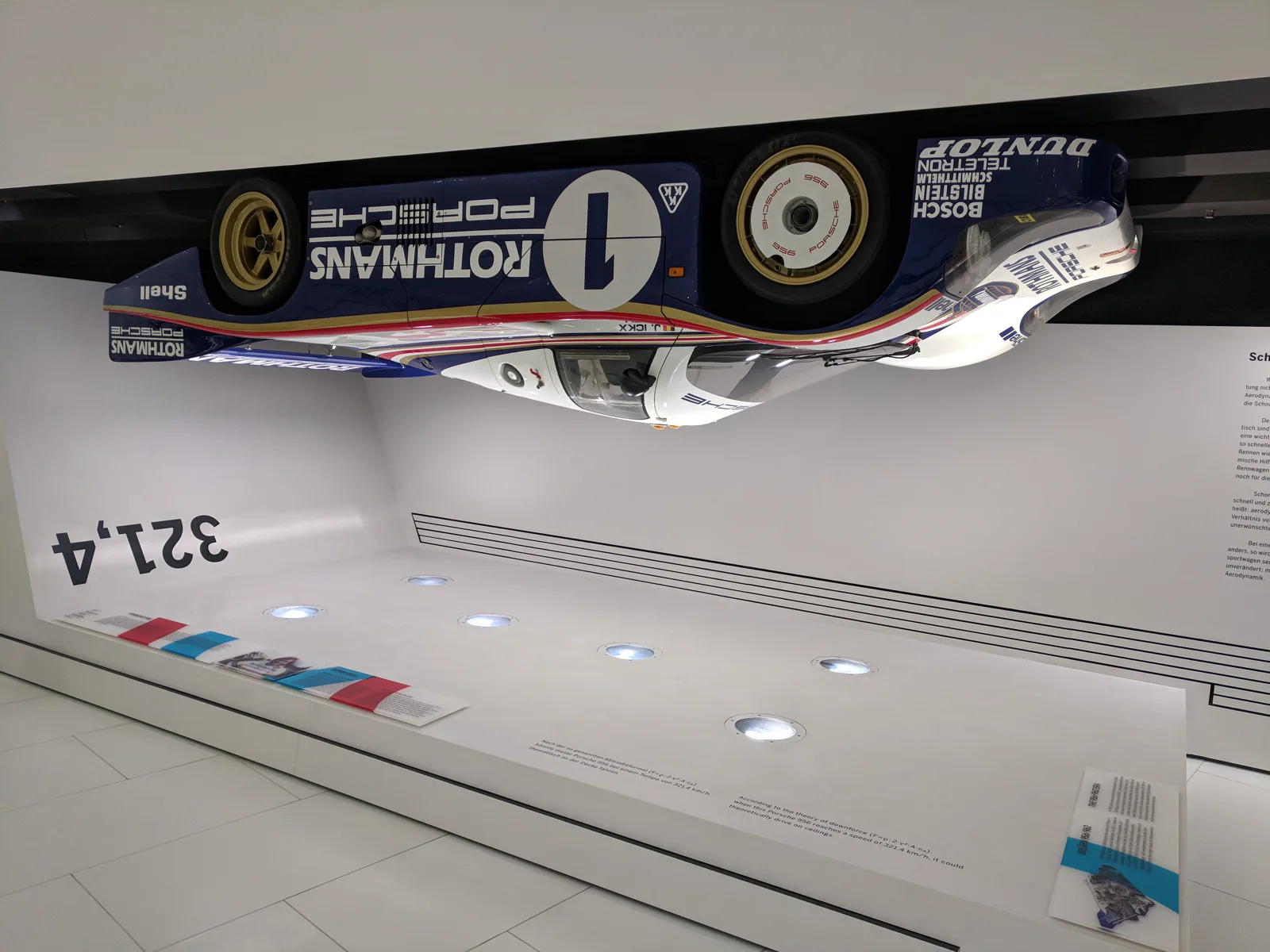
2. Porsche 956-002
This is the car for which the comparison is least speculative. Porsche identifies 956-002 as the 1982 Le Mans winner, driven by Jacky Ickx and Derek Bell. The new 956 finished first, second and third on its Le Mans debut, in race-number order.
Sister chassis 956-003 won Le Mans a year later and four other races. It sold for $10,120,000 at Gooding & Company’s Pebble Beach sale in August 2015. That result is old, but it remains the strongest public transaction for comparing a works, Le Mans-winning 956 with another.
3. Porsche 962 C, the 1987 Le Mans winner
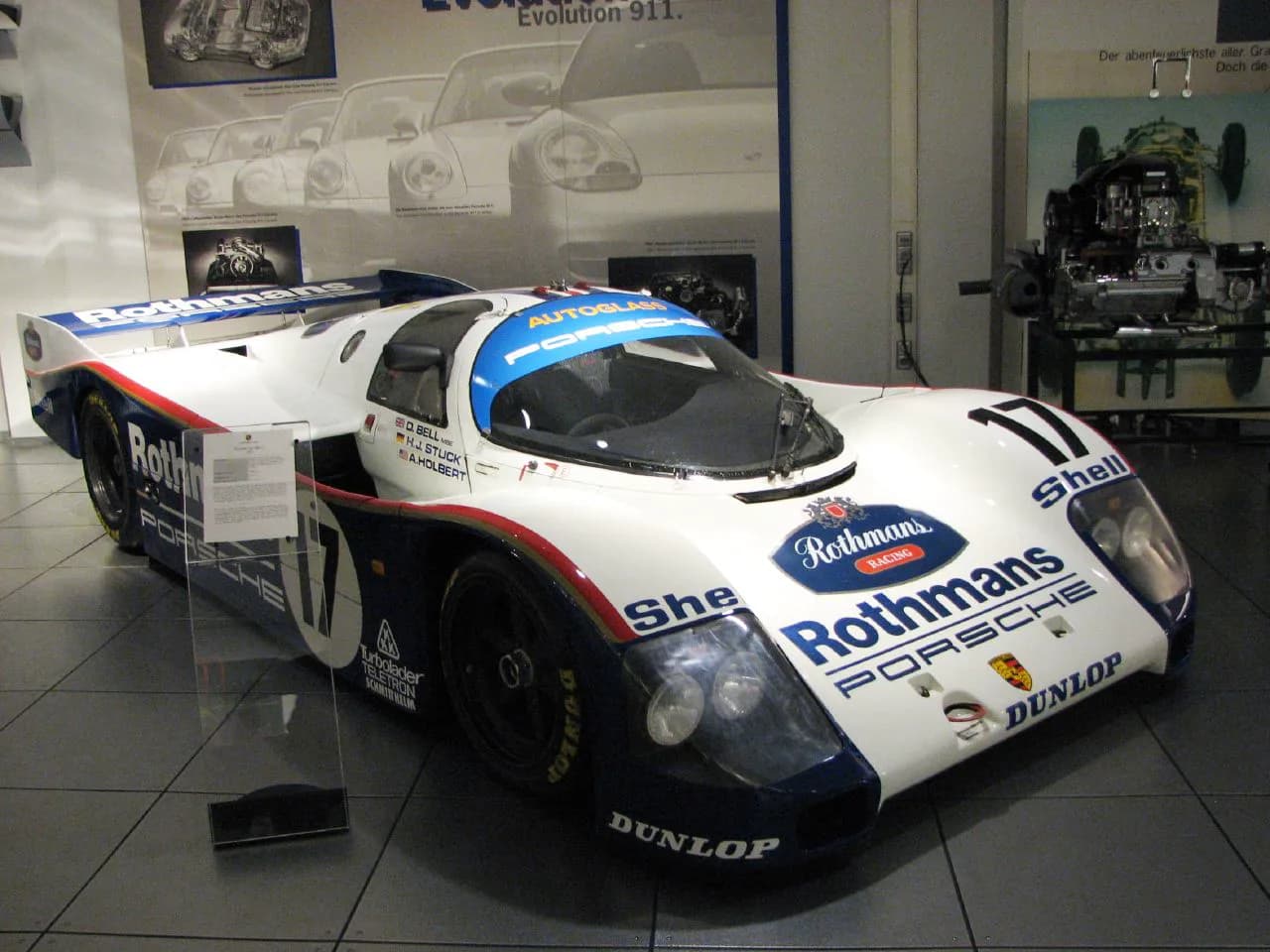
Porsche’s museum documentation records the number 17 962 C as the car Hans-Joachim Stuck, Derek Bell and Al Holbert drove to victory on 13–14 June 1987. It won by 20 laps in a difficult race, was used as an Andretti practice car the following year, and then entered the museum collection.
The closest sold benchmark is far less significant: chassis 962-103, a successful IMSA car and twice a Daytona winner, sold for $1,925,000 at Gooding & Company in March 2012. A works 962, chassis 962-004, carried a €6–9 million estimate at RM Sotheby’s Le Mans sale in 2023 and did not sell. That no-sale matters: an estimate is not proof that a buyer exists at the number.
4. Porsche 935/78 “Moby Dick”
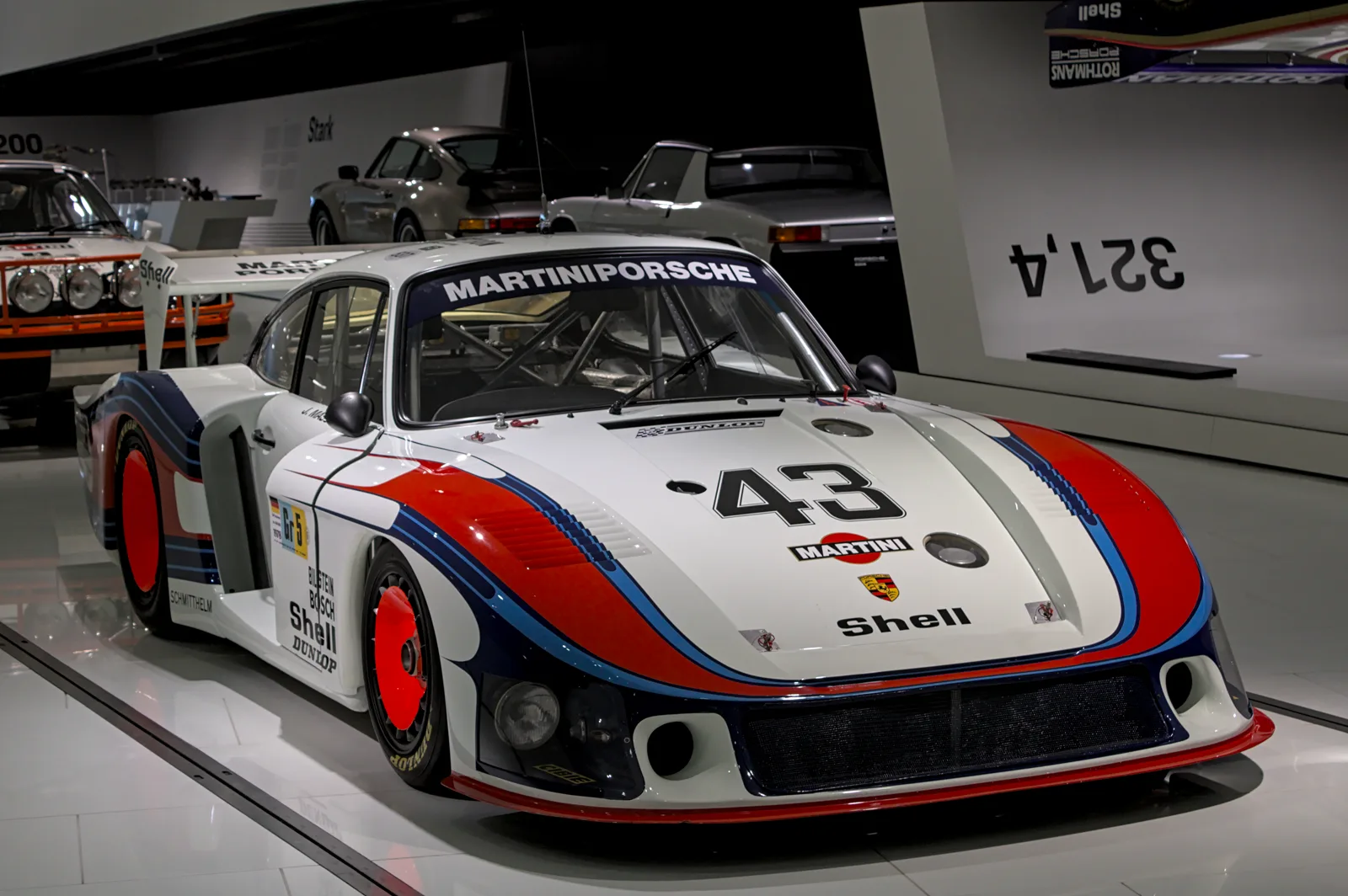
The 935/78 is one of the cases where a normal market comparison almost breaks down. Porsche says the actual museum car won the 1978 Silverstone 6 Hours by seven laps, reached 366 km/h at Le Mans and finished eighth after a misfire and oil leak. It raced only twice more before entering the museum. It was also Porsche’s first competition car with water-cooled cylinder heads.
A 1980 Kremer 935 K3, chassis 000 00027, sold for $1,930,000 at Gooding & Company in August 2021. It is a serious racing Porsche, but it remains a customer-built K3 rather than the unique factory “Moby Dick.”
5. Porsche 908/03-009
Porsche explicitly identifies the museum car as 908/03-009. Pedro Rodríguez and Leo Kinnunen finished second in the 1970 Targa Florio, where Kinnunen set a 33:36 lap record. The car later raced at the Nürburgring and won the 1986 Targa Florio Storica with Brian Redman and Hans Herrmann.
Sister chassis 908/03-003, itself second at the 1970 Nürburgring 1000 km, sold for $3,575,000 at RM Sotheby’s Monterey sale in August 2017.
6. Porsche 550 Spyder, production number 64
Porsche calls the 550 its first purpose-built racing model and identifies the museum example as production number 64 after a two-year restoration. The type took a class win and third overall in the 1954 Carrera Panamericana, but Porsche’s museum account does not transfer that result to number 64.
The strongest comparable is later and more developed: 1958 Porsche 550A Spyder chassis 550A-0145, a works car with substantial competition provenance. It sold for $5,170,000 including premium at Bonhams Scottsdale in January 2018.
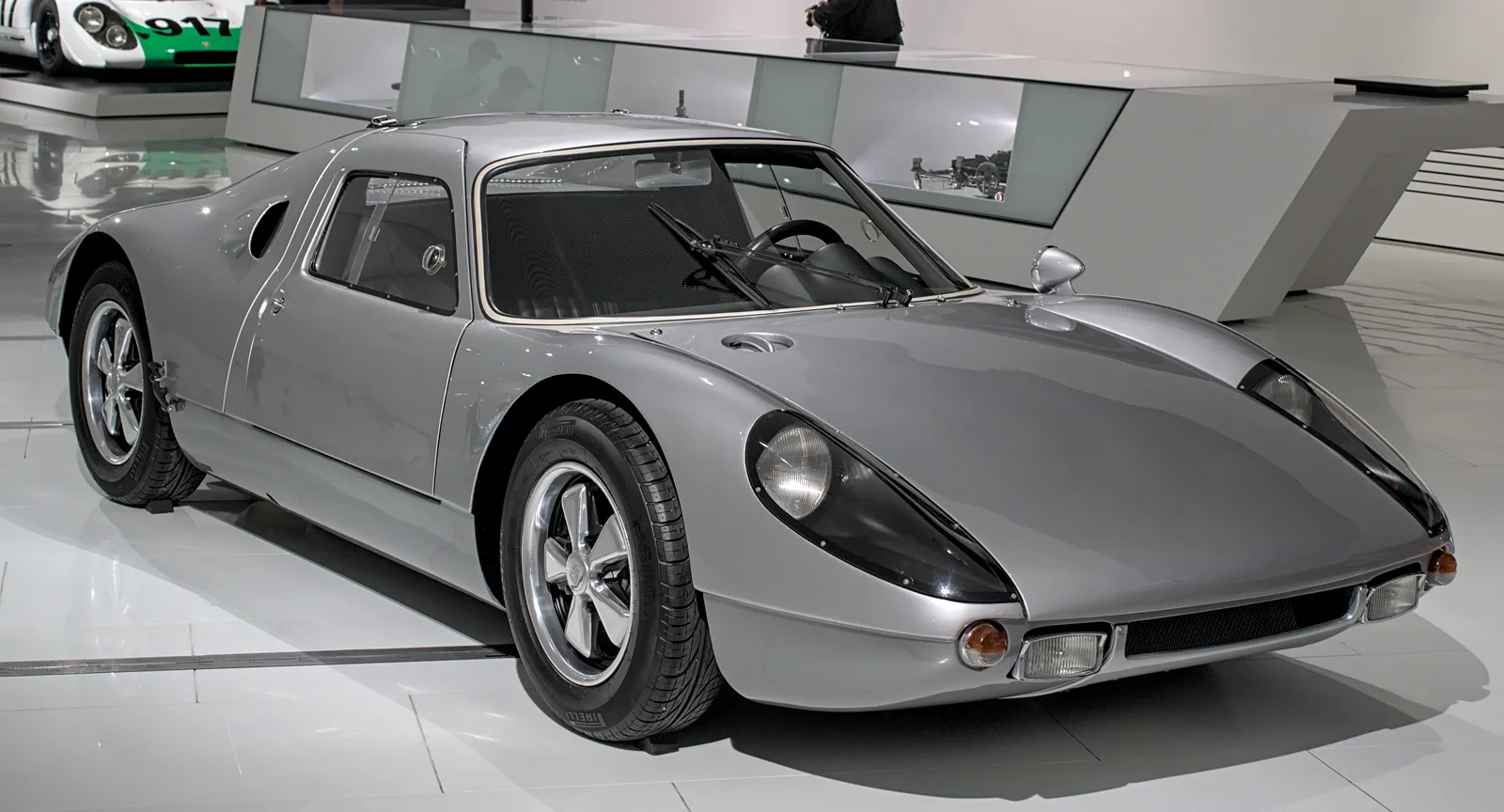
7. Porsche 904 Carrera GTS, eight-cylinder
The museum’s official exhibit page describes a 1964 904 with a 1,982 cc, 240 hp eight-cylinder engine and says only three eight-cylinder 904s were built. It does not publish the display car’s chassis number. That is important because the eight-cylinder works cars are a different proposition from the customer six-cylinder 904s most often sold.
Six-cylinder chassis 904-028, a customer car with substantial racing history, sold for $2,205,000 at Gooding Christie’s Amelia Island sale in March 2025. It anchors the ordinary 904 market, not the identity or value of one of three eight-cylinder cars.
8. Porsche 911 GT1 ’98, Zakspeed
Porsche says its displayed 911 GT1 ’98 was used by Zakspeed in the 1998 FIA GT Championship and took several top-10 results, including third at Silverstone. It was virtually identical to the works cars that finished first and second at Le Mans, but it was not one of those winning chassis.
Two imperfect public comparables bracket the problem. A 1997 GT1 Evolution racer, chassis GT1 993-117, sold for €2,772,000 at RM Sotheby’s Monaco sale in May 2016. A road-legal 1998 GT1 Strassenversion, chassis WS396005, made $5,665,000 at Gooding & Company in March 2017. Road registration and supercar demand make the second car a different asset from a racing GT1.
So which one is worth the most?
There is no defensible single answer. If the question means “which related car has produced the highest public result?”, the 917K benchmark at $14.08 million leads this selection. If it means “which museum chassis has the cleanest same-model evidence?”, the 956-002 has a remarkable comparison in the $10.12 million sale of 956-003.
That still does not make 956-002 a $10.12 million car. It is the first 956 to win Le Mans; the comparable won the following year and sold in 2015. A named appraisal would examine the tub, engine, gearbox, bodywork, restoration record and legal status. A museum work that Porsche is not willing or able to sell does not have a normal clearing price.
Before you visit
The Porsche Museum is at Porscheplatz in Stuttgart-Zuffenhausen. Its own visitor information should be checked for current hours, holiday closures, ticket prices and temporary exhibitions. The collection rotates, so contact the museum before making a journey for one specific chassis.
Allow more time than the headline car count suggests. The racing cars make more sense beside the engines, trophies and engineering displays that explain why Porsche built them. The suspended 956 is memorable; the underfloor story is the reason it belongs there.
If you want to own a comparable Porsche
The museum cars are not the practical market. Privateer 962s, customer 935s, 904s and later Cup cars are.
- Ask for the chassis number before accepting any “Le Mans” or “works” description.
- Match the chassis to period entry lists and results.
- Separate original race history from a later restoration into famous colors.
- Read the FIA HTP and historic papers guide before paying an eligibility premium.
- Budget the running program, not only the purchase.
Browse Porsche race cars for sale, historic race cars for sale, or the broader race car market. For the model buyers actually campaign today, see the Porsche 911 GT3 Cup buyer’s guide. The Le Mans winners and auction values guide puts these Porsche results into the wider endurance market.
Sources
Porsche Museum and vehicle histories
- Porsche Museum official exhibit index
- Porsche: the 956 and 962 Group C reunion
- Porsche: 908/03 chassis 009
- Porsche Museum: 917/30-001
- Porsche Museum: 935/78 “Moby Dick”
- Porsche Museum: 904 Carrera GTS
- Porsche Museum: 911 GT1 ’98
Public sale comparables
- Gooding & Company: Porsche 917K chassis 917-024
- Gooding & Company: Porsche 956 chassis 956-003
- Gooding & Company: Porsche 962 chassis 962-103
- Gooding & Company: Porsche 935 K3 chassis 000 00027
- RM Sotheby’s: Porsche 908/03 chassis 003
- Bonhams: Porsche 550A chassis 550A-0145
- Gooding Christie’s: Porsche 904 chassis 904-028
- RM Sotheby’s: 1997 Porsche 911 GT1 Evolution
- Gooding & Company: 1998 Porsche 911 GT1 Strassenversion
Frequently asked questions
What is the most valuable racing car in the Porsche Museum?
There is no public appraisal of the collection, and the museum’s cars are not normal market assets. Among usable public benchmarks, a Porsche 917K sold for $14,080,000 in 2017 and the 1983 Le Mans-winning Porsche 956 chassis 956-003 sold for $10,120,000 in 2015. Neither sale was the museum’s car.
Does the Porsche Museum display the actual 1982 Le Mans winner?
Porsche identifies chassis 956-002 in its collection as the car Jacky Ickx and Derek Bell drove to victory at Le Mans in 1982. Exhibits rotate, so visitors should not assume it will be on the floor on a particular day.
How many cars are displayed in the Porsche Museum?
Porsche says almost 100 cars and numerous smaller exhibits are presented, with regular rotation and special exhibitions. The wider historic fleet is larger than the number visible at once.
Can you buy a car from the Porsche Museum?
The museum is not a showroom and its historic works cars are not advertised for sale. Comparable customer and privateer Porsches do reach public auction and specialist race-car dealers.
Are the values in this article appraisals of the museum cars?
No. They are documented sales of different cars used as market benchmarks. Chassis identity, race record, originality and factory ownership can make the museum car worth much more—or make a normal sale comparison meaningless.