Motorsport Acronyms Explained, From FIA to MP4
Motorsport runs on shorthand, and every acronym in a classified ad carries money with it. An in-date FT3 bladder is a few thousand euros you do not have to spend. An expired HTP can mean the car you just bought cannot enter the series you bought it for.
This decodes the acronyms you will actually meet, and the question that follows close behind: why is a McLaren an MP4, a Williams an FW, a Brabham a BT and a Ferrari a 312T.
Governing bodies and the paperwork they issue
FIA — Fédération Internationale de l'Automobile. The world governing body. It writes the technical regulations that define the classes below, homologates cars into them, and sets the safety standards that equipment is certified against.
ASN — Autorité Sportive Nationale. The FIA's national delegate in each country, and the body that actually issues your competition licence and your car's papers. Yours is one of these:
| Country | ASN |
|---|---|
| United Kingdom | Motorsport UK (formerly MSA) |
| France | FFSA |
| Germany | DMSB |
| Italy | ACI Sport (formerly CSAI) |
| Belgium | RACB |
| Netherlands | KNAF |
| Spain | RFEdA |
| United States | ACCUS |
ACO — Automobile Club de l'Ouest. Organiser of the Le Mans 24 Hours and author of the regulations the FIA World Endurance Championship is built on. When a prototype class is described as ACO-spec, this is why.
IMSA, SCCA, NASCAR — the North American bodies. IMSA runs the WeatherTech SportsCar Championship, SCCA runs club racing and issues its own logbooks, NASCAR governs stock car racing and its own technical rulebook.
The documents themselves matter more than the bodies:
HTP — Historic Technical Passport. The FIA document that records a historic car's specification, period and eligibility with photographs and measurements. Most historic organisers want to see one before they accept an entry. It has an expiry date, and renewals require the car to still match the document. Crucially, the FIA is explicit that an HTP is not a certificate of authenticity: it establishes technical eligibility, and says nothing about the car's provenance or the history of its constituent parts.
CoC — Certificate of Conformity. A road-car document, not a race one, but it appears constantly in transporter and road-legal performance listings because it is what a national registration authority wants.
Logbook — the ASN-issued record of a car's identity, scrutineering history and any damage. Motorsport UK issues one; so do most ASNs under other names. A continuous logbook is valuable evidence of a car's competition and scrutineering history, but it is evidence rather than complete proof of provenance.
Homologation form — the period document that defines what a car was allowed to be when it was homologated. For Group A, Group B and Group N cars this is the reference every scrutineer measures against.
Race car classes you will see in listings
Circuit
GT3 — the premium production-based customer GT class. Roughly 500 to 600 hp, big aero, sequential gearbox, run to Balance of Performance so a Ferrari, a Porsche and a Lamborghini can race each other on merit rather than on displacement.
GT4 — the more accessible tier of the same family. Much less aero, far cheaper to run, typically 350 to 500 hp. The entry point into serious GT racing. Neither label describes the driver: plenty of amateurs race GT3, and GT4 grids can be fiercely professional.
GTE and GT2 — GTE was the endurance GT class at Le Mans until LMGT3, built on the FIA GT3 technical platform, replaced it in the World Endurance Championship in 2024. Modern SRO GT2 is a separate high-powered customer GT category, distinct from GTE and its lineage, and it is run to its own Balance of Performance.
LMP1, LMP2, LMP3 — Le Mans Prototype, tiers one to three. LMP1 was the top prototype class until 2020. LMP2 is a spec-chassis class from four approved constructors. LMP3 is the entry prototype.
LMH and LMDh — Le Mans Hypercar and Le Mans Daytona h. The two rulesets that replaced LMP1 and now race against each other for outright wins. LMH allows a bespoke chassis; LMDh mandates one of four spec chassis with a common hybrid system.
DPi — Daytona Prototype international, the IMSA class LMDh replaced.
GTP — Grand Touring Prototype, the historic IMSA name revived for its current top class. GTP admits both LMDh and LMH machinery: the Aston Martin Valkyrie has raced there as an LMH since 2025.
TCR — Touring Car Racing. Two-litre turbo front-wheel-drive touring cars, sold ready to race, run to BoP in dozens of national series. The most successful touring car formula of the last decade.
NGTC — Next Generation Touring Car, the British Touring Car Championship's own spec-heavy ruleset.
Group A, Group B, Group N, Group H — the period FIA production categories. Group A was the homologated touring and rally class that produced the Sierra RS500 and Lancia Delta Integrale. Group B was the short-lived unlimited rally class killed in 1986. Group N was showroom-spec. Group H covers modified historic cars under some national rules.
Rally
Rally1, Rally2, Rally3, Rally4, Rally5 — the current FIA rally pyramid, top to bottom. Rally1 is the top WRC category. The current Rally1 regulations debuted in 2022 and replaced the previous-generation World Rally Cars with a new design; plug-in hybrid units ran from 2022 to 2024, then were dropped from 2025, so 2026 Rally1 cars are internal-combustion only under FIA Appendix J Article 262. Rally2 is the four-wheel-drive 1.6 turbo class that most national championships are won in.
R5 — the previous name for Rally2. The FIA reclassified these cars under the Rally2 label without changing them, which is why a Fabia R5 and a Fabia Rally2 are the same class of machine. You will see both names on the same car in the same advert.
WRC — World Rally Championship, and by extension the World Rally Car built for it. A 2017 to 2021 WRC car is a different and far more expensive thing than a Rally2.
S2000 — Super 2000, the naturally aspirated two-litre four-wheel-drive class that R5 replaced.
RGT — the rally class for GT cars, which is where the rally-prepared Porsche 911 and Alpine A110 live.
Safety standards, and why the numbers matter
Safety acronyms are dates as much as specifications. Many safety-critical components carry a defined service life or regulatory validity date, so the label on the part — and the regulation it was approved under — is part of what you are valuing. An out-of-date item is a cost the buyer inherits.
FHR — Frontal Head Restraint. The generic term for the device category.
HANS — Head And Neck Support. One type of FHR, and a brand name that became the generic word for the category the way Hoover did for vacuum cleaners. FIA-approved FHR systems are principally covered by FIA Standard 8858-2010.
FT3, FT3.5, FT5 — FIA fuel cell (safety bladder) standards, in ascending order of severity. The critical detail is the expiry: an FT3-1999 bladder is normally valid for five years from manufacture, and the manufacturer may inspect and recertify it for up to two further years — seven in total, not ten. Replacing one is a four-figure job on most cars.
FIA 8855-1999, 8855-2021 and 8862-2009 — seat standards. An 8855-1999 seat has a short service life; the newer 8855-2021 standard carries a ten-year FIA validity. 8862-2009 advanced racing seats are the stronger, more expensive specification and also run to a ten-year use limit.
FIA 8853-2016 — the current harness standard. A harness expires at the end of the fifth year following its year of manufacture, so one made in 2022 is valid to 31 December 2027. Read the date printed on the FIA label rather than the advert.
FIA 8856-2000 and 8856-2018 — race suit and underwear standards.
SFI and Snell — the North American equivalents. SFI Foundation certifies suits, harnesses and bellhousings; Snell certifies helmets. A Snell SA2020 helmet and an FIA 8859-2015 helmet are different approvals for the same job.
ROPS — Roll Over Protection Structure, the formal name for the roll cage. It must match the homologation drawing or the ASN certification, and a repaired cage without documentation is a real problem at scrutineering.
Technical shorthand
ECU — Engine Control Unit. In a race context usually an aftermarket unit such as a MoTeC, Life or Bosch Motorsport box, and the thing that holds the calibration you are really buying.
DRS — Drag Reduction System, the driver-operated rear wing flap used in Formula 1 through 2025 and still found in some junior categories. F1 itself dropped DRS for 2026, replacing it with active front and rear aerodynamics plus an electrical Override Mode for overtaking.
KERS, ERS, MGU-K, MGU-H — Kinetic Energy Recovery System was the earlier kinetic-only recovery system. ERS succeeded it and incorporated the MGU-K (K for kinetic, recovering under braking) and, in Formula 1 from 2014 to 2025, the MGU-H (H for heat, recovering from the turbo). The MGU-H was removed under the 2026 F1 power-unit regulations, so it now belongs to a closed era rather than the current one.
ALS — Anti-Lag System. Keeps a turbo spinning off-throttle. Brutal on exhaust components, which is why rally cars are advertised with hours since the last turbo rebuild.
LSD — Limited Slip Differential. Plate, viscous or torque-biasing. On a rally car, the differential package is one of the biggest single differences between two otherwise identical listings.
TC and ABS — Traction Control and Anti-lock Braking System. Legal in GT3, banned in most historic classes, and a common reason a car is or is not eligible for a given grid.
DCT — Dual Clutch Transmission. Distinct from a sequential gearbox and from a dog box, which replaces synchros with dog rings for faster shifts. Dog engagement is not the same thing as straight-cut gears: the engagement mechanism and the tooth profile are separate design choices, and suppliers sell dog-engagement boxes with either straight-cut or helical gears.
NA — Naturally Aspirated. FI — Forced Induction.
BHP, PS, kW — three units for the same thing. 100 PS is 98.6 bhp is 73.5 kW. European listings quote PS or kW, British and American listings quote bhp, and the difference is worth checking before you compare two cars.
CAN bus — Controller Area Network. The data backbone a modern race car's dash, ECU and logger talk over.
AMB and X2 — the transponder systems circuits use for timing. A car sold with its own transponder saves you around a thousand euros.
Where the model names come from
This is the part nobody explains. Racing car names are not marketing; they are internal engineering codes that leaked into public use, and once you know the pattern you can date a car from its name.
MP4: McLaren Project Four
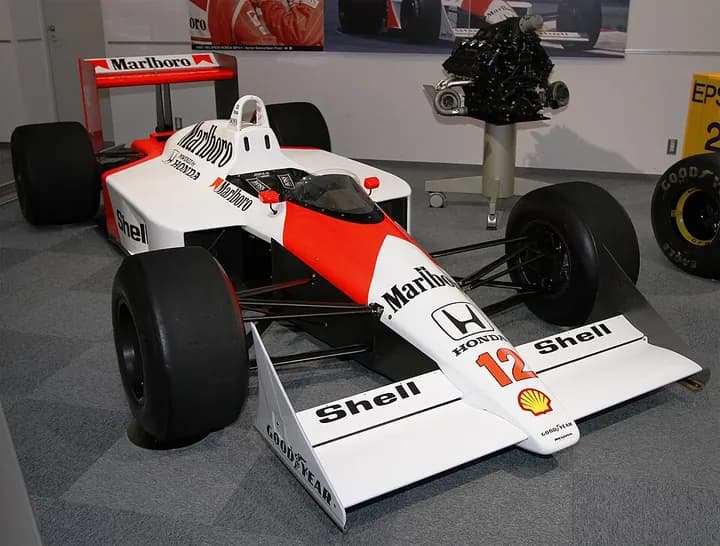
In 1980, Ron Dennis's Project Four Racing merged with the McLaren team. The first car of the new operation, the 1981 MP4/1, took its name from the two halves of that deal: McLaren Project 4. Marlboro was the title sponsor that funded the merger and is often credited with the M, but McLaren's own records define MP4 as McLaren Project Four. The designation survived the sponsorship by two decades, running from MP4/1 to MP4-31 in 2016, and it is why a McLaren road car is a 720S but a McLaren Formula 1 car of that era is an MP4-30. From 2017 the team switched to MCL, simply McLaren.
Note the slash. McLaren used MP4/1 through MP4/20, then switched to a hyphen with MP4-21 in 2006. Sellers get this wrong constantly, and it is a quick authenticity tell on memorabilia.
FW: Frank Williams
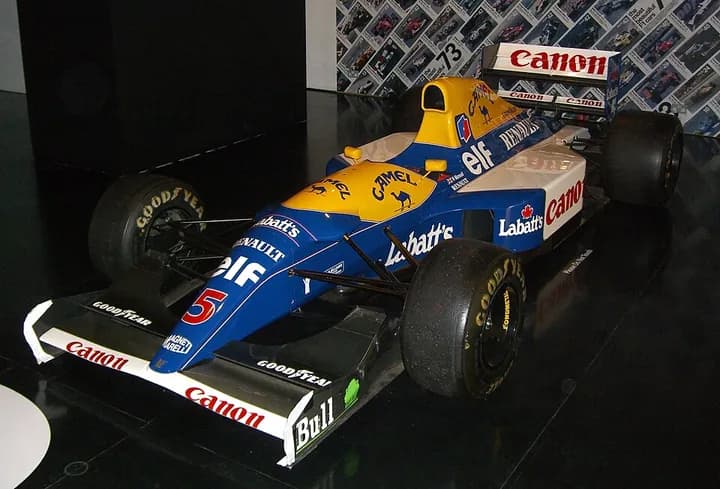
FW is the founder's initials. The number is a running count of designs rather than a year, and it has carried on through every ownership change — though not without exceptions: Williams skipped FW39 and called the 2017 car FW40 to mark the team's fortieth anniversary. A suffix letter marks a significant revision rather than a new car: FW14B was the active-suspension development of the FW14, and it won the 1992 championship.
BT: Brabham Tauranac
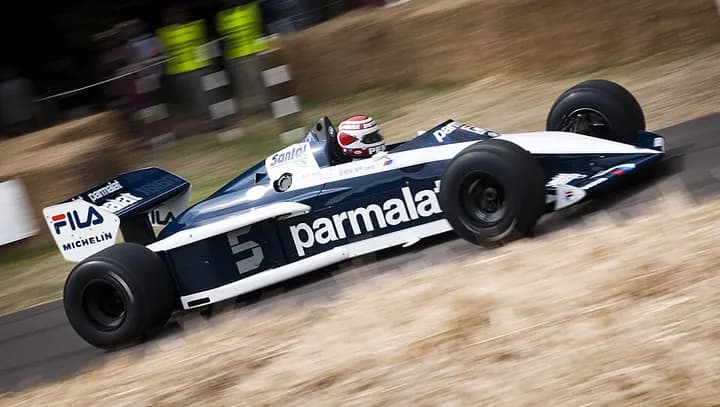
BT is Brabham and Tauranac, the driver and the designer who built the cars together. The convention outlasted both men's involvement with the team.
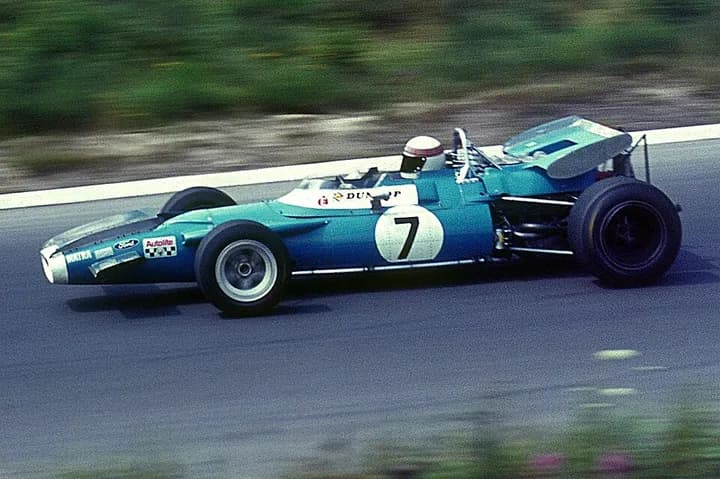
MS: Matra Sports
The numeric conventions
Not every name is initials. Two other systems are just as common.
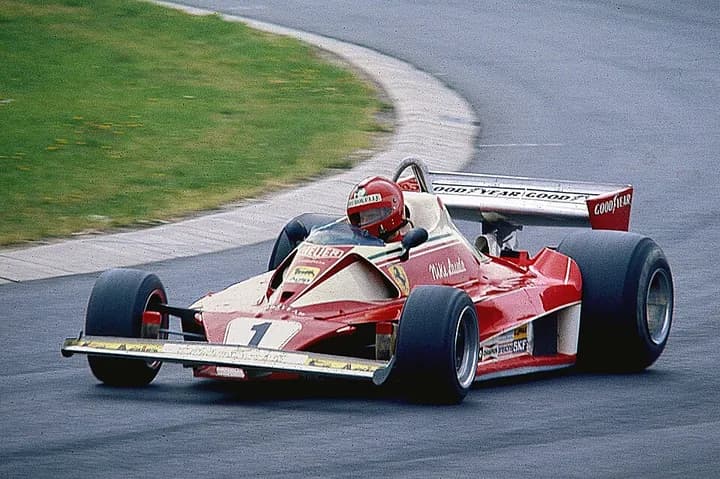
Ferrari: the engine is the name. A 312T is a 3.0-litre, 12-cylinder car with a Transversale (transverse) gearbox. The 126C family used Ferrari's 120-degree V6, and the suffix identified the development: the 126CK ran KKK turbochargers, while the experimental 126CX used the Comprex pressure-wave supercharger. A 250 GTO is 250cc per cylinder across twelve cylinders, and GTO is Gran Turismo Omologato, homologated for grand touring. Ferrari abandoned the system for a while in favour of year-based names such as F2004, then returned to codes like SF-24.
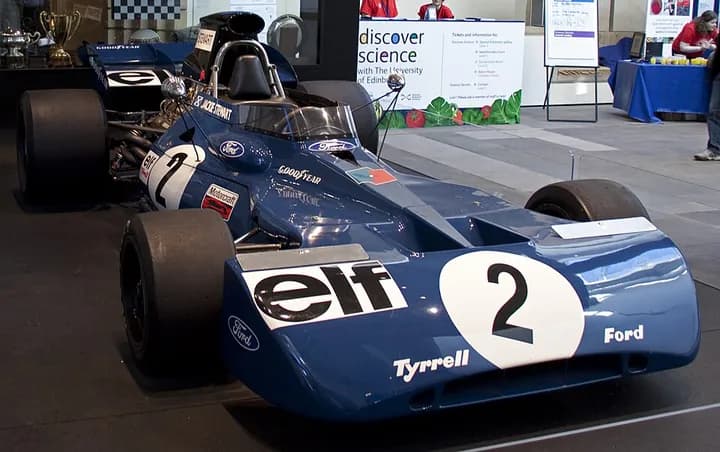
Tyrrell and Lotus: count the cars. Tyrrell numbered chassis sequentially from 001, so the Tyrrell 003 is literally the third car the team built, and it won the 1971 championship. Lotus numbered every project, road and race together, in one list: the Type 49, Type 72 and Type 79 sit in the same sequence as the Elan and the Esprit.
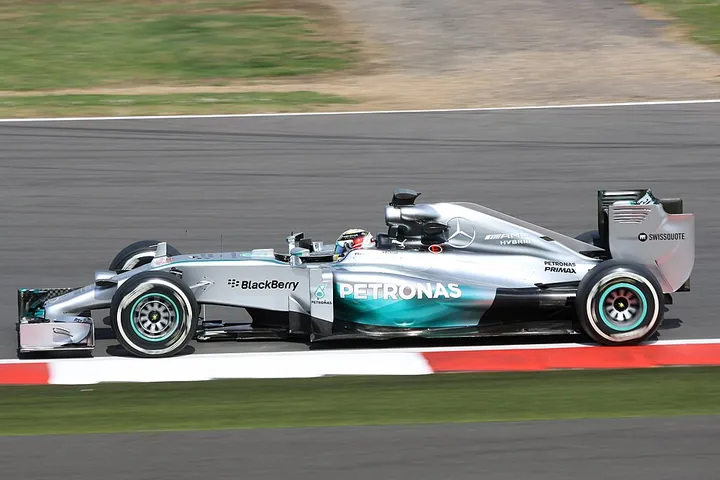
Mercedes: W for Wagen. Mercedes has used internal chassis codes for a century, and W — from Wagen — is the best known, running from the W196 of 1954 to the W05 Hybrid of 2014. It is not the only one: production cars also carry C, S, R and X prefixes depending on body style and platform.
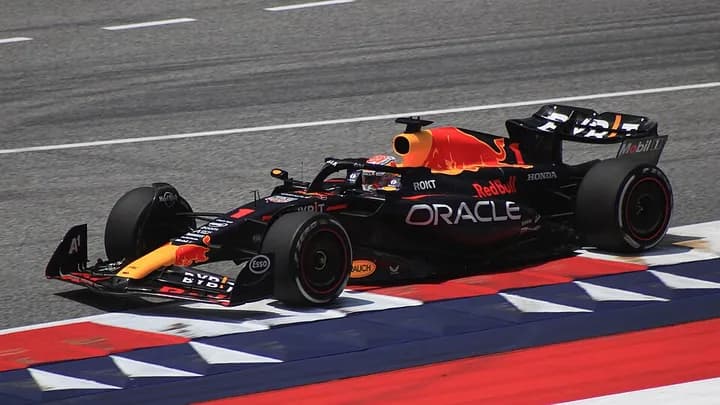
Red Bull: RB. The prefix is simply Red Bull, running from RB1 in 2005. The numbering broadly follows successive designs but does not map cleanly onto seasons: the 2021 car was RB16B, and the F1 designation RB17 was skipped altogether before RB18 appeared in 2022.
Sports and rally codes worth knowing
Porsche 917, 956, 962, 919 — Porsche numbers projects sequentially across the whole company, which is why a 917 racing prototype and a 911 road car sit near each other in a list that has nothing to do with either car's size or era. RSR is Rennsport Rennwagen. GT3 Cup and GT3 R are the one-make and the GT3-class versions of the same base car.
Ford GT40 — the 40 is inches. The car was 40 inches tall at the roof, a rules-driven dimension that became the name.
BMW M3 E30 — the E number is the BMW internal chassis code, not a model name. E30, E36, E46, E92 and G80 are successive M3 generations, and in a listing the E number is more precise than the year.
Lancia 037 — the Abarth project number, SE 037.
Škoda Fabia R5 and Rally2 evo — R5 is the old class name, Rally2 the current one, and evo marks the homologated evolution package. The three appear in every combination in the classifieds.
Dallara F3, F308, F312 — Dallara names Formula 3 cars by year of introduction. An F312 is the 2012 car, and it will still be racing in national championships a decade later.
Buying and importing shorthand
POA and POR — Price On Application, Price On Request. Both mean the seller wants a conversation before a number.
VAT, TVA, MwSt, BTW, IVA — the same value added tax across six European markets, at rates that run past 20 per cent in several of them (21 per cent in Belgium, 22 per cent in Italy). VAT qualifying signals that the tax may be reclaimable, and the treatment can move the effective purchase price materially — but recoverability depends on the seller's VAT scheme, the buyer's status, the countries involved and whether the deal is domestic, intra-EU or an import. It is the single most misunderstood line in cross-border race car sales, and the one worth taking to an accountant.
NOVA — Notification of Vehicle Arrival, the UK import declaration.
Carnet ATA — the temporary import document that lets a competition car cross a border for an event and come back without duty. Standard equipment for teams racing outside their home market.
VIN and chassis number — for a race car these are often different things. Purpose-built competition cars frequently have a constructor's chassis plate rather than a road VIN, and matching that plate to the HTP or logbook is the core of verifying a historic car's identity.
The short version
If you remember three things from this page, make them these.
Acronyms with a number in them are usually standards with an expiry date, and expiry dates are money. FT3, 8855, 8853, 8858: check the date stamped on the item, not the description in the advert.
Some class names change while broadly the same cars stay eligible: R5 became Rally2, MSA became Motorsport UK. Others are genuine technical changes wearing a new name — LMGT3 replaced GTE in the WEC on the FIA GT3 platform, and Rally1 replaced the World Rally Car with a new generation of machine. Work out which kind of rename you are looking at before you read anything into it.
Model names are engineering codes. MP4 is McLaren Project Four, FW is Frank Williams, BT is Brabham Tauranac, 312T is three litres and twelve cylinders with a transverse gearbox. Once you can read them, a name tells you the constructor, often the era, and sometimes the specification, before you have read a single line of the description.
For the paperwork behind historic eligibility, read the FIA HTP and historic papers guide. For how those labels show up in asking prices, see the complete buyer's guide to race cars for sale and every F1 world champion's car and what it is worth.
Sources
- FIA — WRC Rally1 technical changes
- FIA Technical Lists
- McLaren — 1981 Formula 1 McLaren MP4/1
- FIA — Safety fuel bladder standard guidelines
- FIA — HTP detailed guidelines
- FIA Standard 8858-2010 — Frontal Head Restraint
- FIA — New 8855-2021 seat standard
- FIA Standard 8853-2016 — Safety harnesses
- FIA — Formula 1's new era for 2026
- IMSA — Top class named GTP from 2023
- FIA WEC — What's new in 2024
- FIA Historic
- TCR Series
- Motorsport UK
- EU taxation and customs
Frequently asked questions
What does MP4 stand for on a McLaren?
McLaren Project Four. When Ron Dennis's Project Four Racing merged with McLaren in 1980, the new cars took the McLaren name and the Project Four designation of the team it merged with. Marlboro was the title sponsor that funded the deal, but McLaren itself defines MP4 as McLaren Project Four. The designation ran from the MP4/1 of 1981 to the MP4-31 of 2016, after which McLaren switched to MCL.
What is the difference between GT3 and GT4?
Both are production-based GT categories written by the FIA and run to Balance of Performance. GT3 is the premium customer GT tier with more downforce, slick tyres, sequential gearboxes and roughly 500 to 600 hp; GT4 is the more accessible tier with far less aero, smaller budgets and typically 350 to 500 hp. Neither is reserved for a class of driver — amateurs race GT3 and GT4 fields can be very quick — but a GT4 car costs roughly a third of a GT3 to buy and a fraction of it to run.
What does HANS stand for and is it required?
Head And Neck Support. HANS is one type of Frontal Head Restraint (FHR), a device that stops the head rotating forward in a frontal impact, and an FHR certified to FIA Standard 8858-2010 is mandatory for almost all circuit and stage rally competition. HANS is a brand name that became the generic term, in the same way people say Hoover for a vacuum cleaner.
What does R5 mean and why is it now called Rally2?
R5 was the FIA class for four-wheel-drive, 1.6-litre turbo rally cars introduced in 2013, sitting below World Rally Car. When the FIA renamed the rally pyramid, R5 cars were reclassified under the Rally2 name without changing, which is why a 2016 Fabia R5 and a 2022 Fabia Rally2 evo sit in the same class. Rally1 is a different story: it is the top WRC category, and the Rally1 technical regulations introduced a new generation of car in 2022 to replace the World Rally Cars rather than simply renaming them.
What does FIA HTP stand for?
Historic Technical Passport. It is the FIA document that records a historic competition car's specification, period and eligibility, with photographs and measurements, and it is what most historic race organisers ask for before they accept an entry. Buying a historic car with an in-date HTP is very different from buying one without — but note that an HTP is not a certificate of authenticity and does not verify provenance or the history of the car's individual parts.