Which Are the Most Valuable Cars in the Spa-Francorchamps Museum?
Under the vaulted cellars of Stavelot Abbey, a few minutes from the circuit, the Spa-Francorchamps Circuit Museum holds one of the finest collections of historic cars in Belgium. In April 2024 the circuit announced 47 cars and 40 motorcycles on display, with a combined value estimated at no less than €14 million. Which of them are the most valuable? This guide answers car by car, from documented public sales.
The cars on display at the Spa-Francorchamps museum belong to private owners and are shown on loan. The circuit says so itself: every vehicle on display belongs to private owners, some of whom lend them for a fixed period only. The display therefore changes from one year to the next, and every car in this guide is dated by the years it was recorded on site.
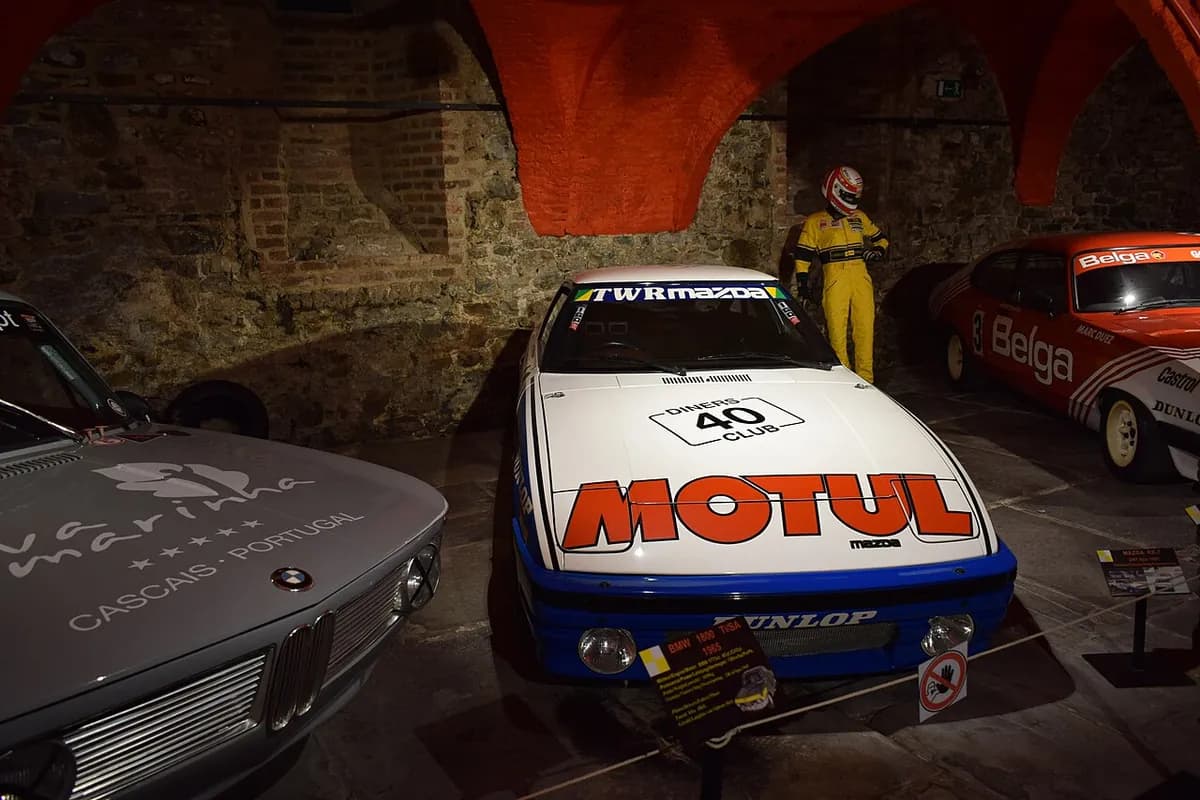
How did we build this ranking?
The method matters more than the order of the ranking. It comes down to six rules.
- We identify the vehicles on display. Each car below has been recorded in the museum in a dated source: a free-licensed photograph taken on site, a visitor gallery or a published visit report.
- We look for comparable public sales of the same model: RM Sotheby's, Bonhams or Gooding auctions with a published result.
- We favour documented results: the price actually paid, buyer's premium included, in its original currency, with the auction house's page as the source. The euro equivalent is only an order of magnitude, calculated at the ECB reference rate on the date of the sale, and is used only for ranking.
- The result belongs to another chassis, unless stated otherwise. The comparable is not the car on display, and we give its year and chassis number separately.
- History, authenticity and race record weigh heavily. For a competition car, the chassis, the drivers, the period results, the originality of the mechanical parts and the continuity of ownership can multiply a value or divide it.
- No reliable comparable, no value. Where no sufficiently close sale exists, or the identity of the car on display is not documented, we put forward no figure.
Market benchmarks: what comparable cars have sold for
Ranked by the approximate euro equivalent of each public result. Each price belongs to the comparable named, not to the car on display in the museum. 'In the museum' gives the years the car was recorded on site.
1965 Alfa Romeo Giulia Sprint GTA
In the museum: 2024
Comparable sold: 1966 Alfa Romeo Giulia Sprint GTA
In the museum: 2018, 2023, 2025
Comparable sold: 1979 Ford Capri Group 1 (ex-Gordon Spice)
In the museum: 2020, 2025
No benchmark given
In the museum: 2018
No benchmark given
1. Ferrari F40
The F40 is the museum's most recognisable car. It was photographed there in February 2024 and still appears in a visitor gallery published in July 2025. Its chassis number is not publicly stated.
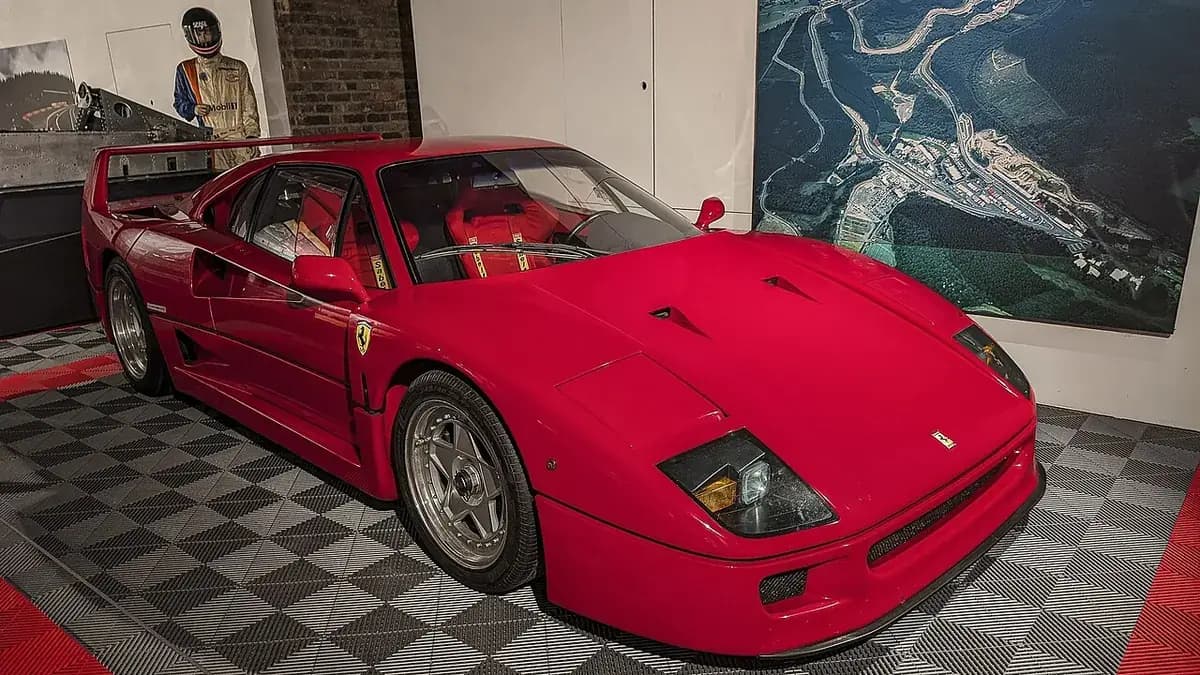
Important: this result belongs to the comparable named above and is not an estimate of the example on display in the museum.
It is an exceptional result, among the highest seen for a standard F40. RM Sotheby's does not present it as a record in its sale press release. The car showed 1,799 km, had had only two owners and had been delivered new in Belgium through Garage Francorchamps, Jacques Swaters' Ferrari dealership in Brussels. Higher-mileage F40s trade well below it: on this model, mileage, service history and Ferrari Classiche certification can put more than a million euros between two cars. To follow this market, see Ferrari race cars for sale.
2. Porsche 962 C
A Porsche 962 C was recorded in the museum's endurance section during a visit published by Endurance-Info in 2020. A 962 in Financial Times livery still appears in 2023, in the background of a photograph of the Porsche 910 (see below). Its chassis number is not publicly stated.
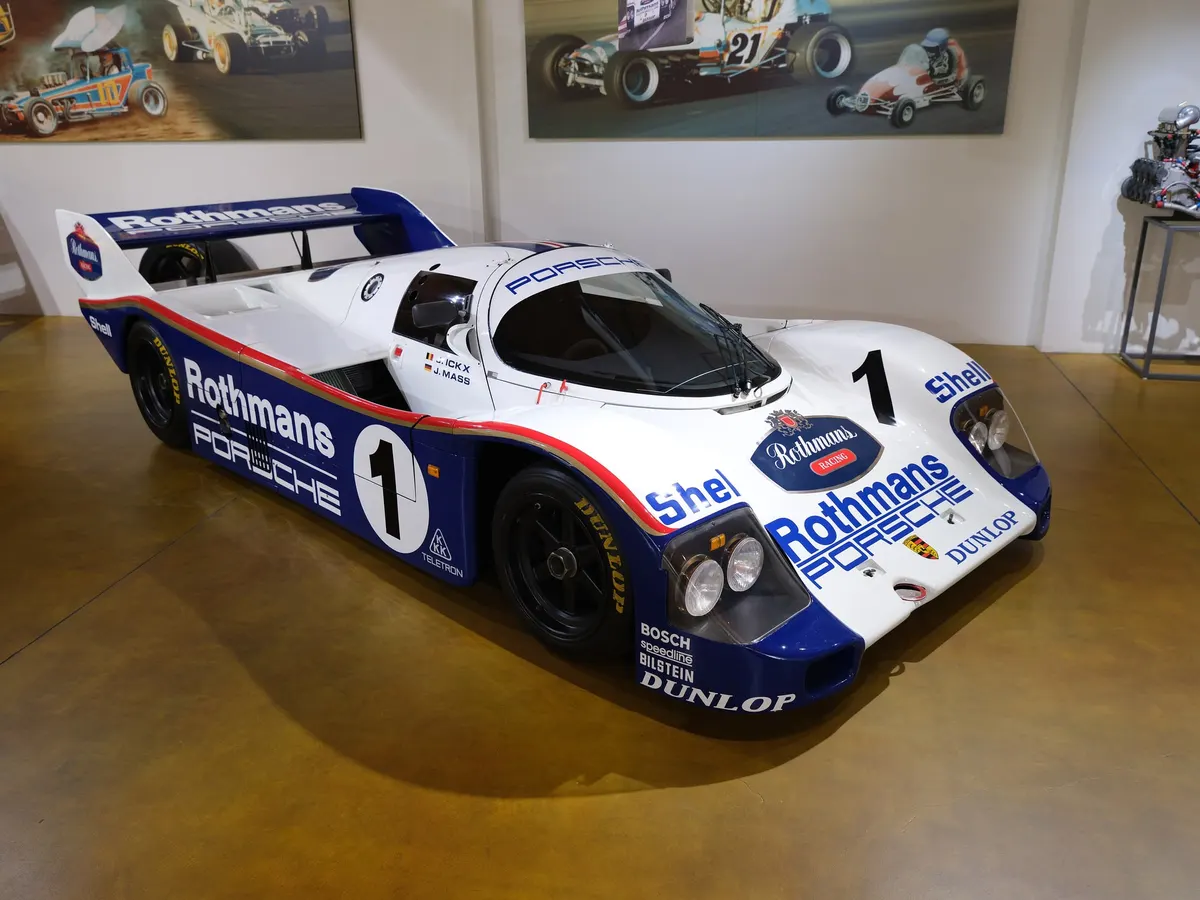
Important: this result belongs to the comparable named above and is not an estimate of the example on display in the museum.
Chassis 962-155 finished seventh overall and first Porsche home at the 1993 Le Mans 24 Hours, driven by Jürgen Oppermann, Otto Altenbach and Loris Kessel. Group C is the last era in which a private team could buy a car capable of fighting for the overall win at Le Mans. Works 962s with major race records sit in a different price bracket from privateer cars. Our Le Mans winners guide covers this market in detail, and Porsche race cars for sale shows what is available today.
3. Porsche 910
The same 2020 visit describes a "1968" Porsche 910 in the endurance hall. In May 2023 a white 910, number 140, with "J. Romano" on the door, is still photographed there. Its chassis number is not publicly stated.
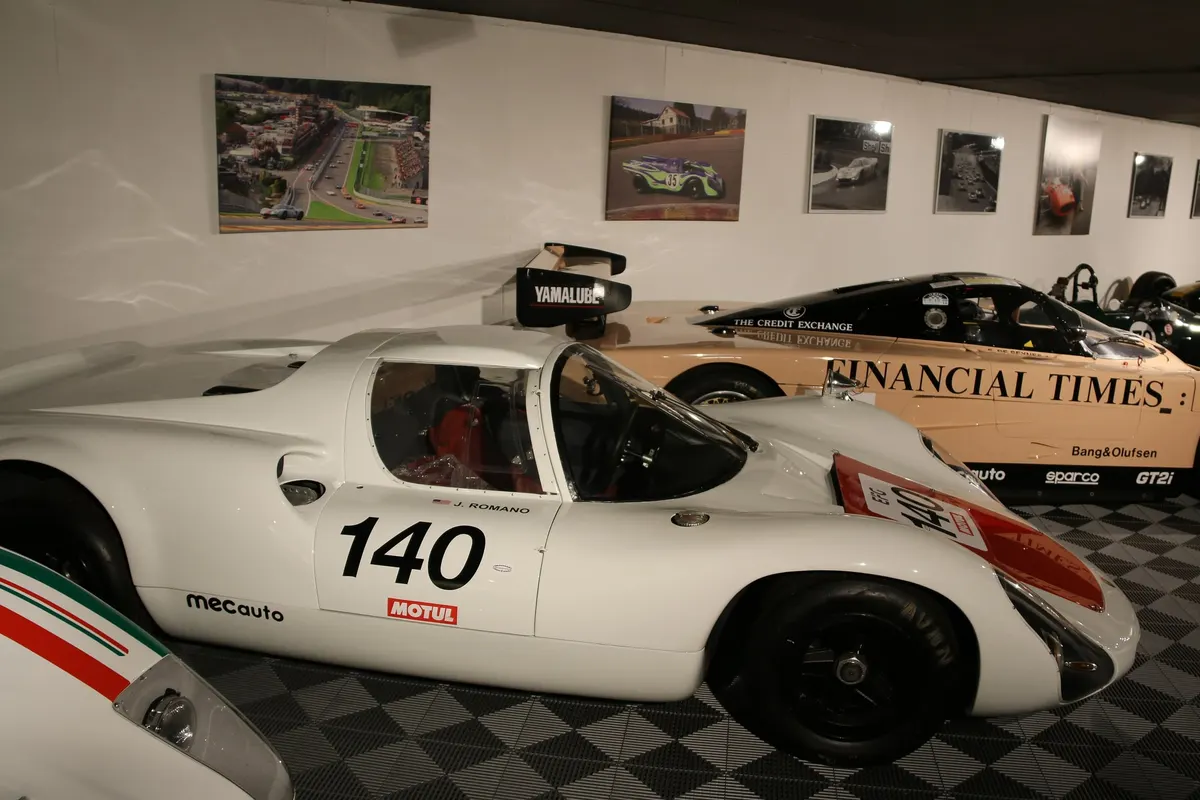
Important: this result belongs to the comparable named above and is not an estimate of the example on display in the museum.
The 910 is the bridge between the 906 and the 908. It was built in very small numbers for the 1967 season, then raced by privateers for years afterwards. Gooding attributes a class win at the 1969 Spa 1000 km to chassis 910-020. The Racing Sports Cars results confirm that a 910 entered by Bill Bradley, driven by Bradley and Dean, finished 12th overall and first in the Sports 2.0 class there. Another 910, also from 1967, reached $2,500,000 on Bring a Trailer in 2023. Where a chassis sits between those two figures depends on who drove it and what it won.
4. Brabham BT26
A 1968 Brabham BT26 appears in the single-seater hall in a visitor gallery from July 2025. Its chassis number is not publicly stated.
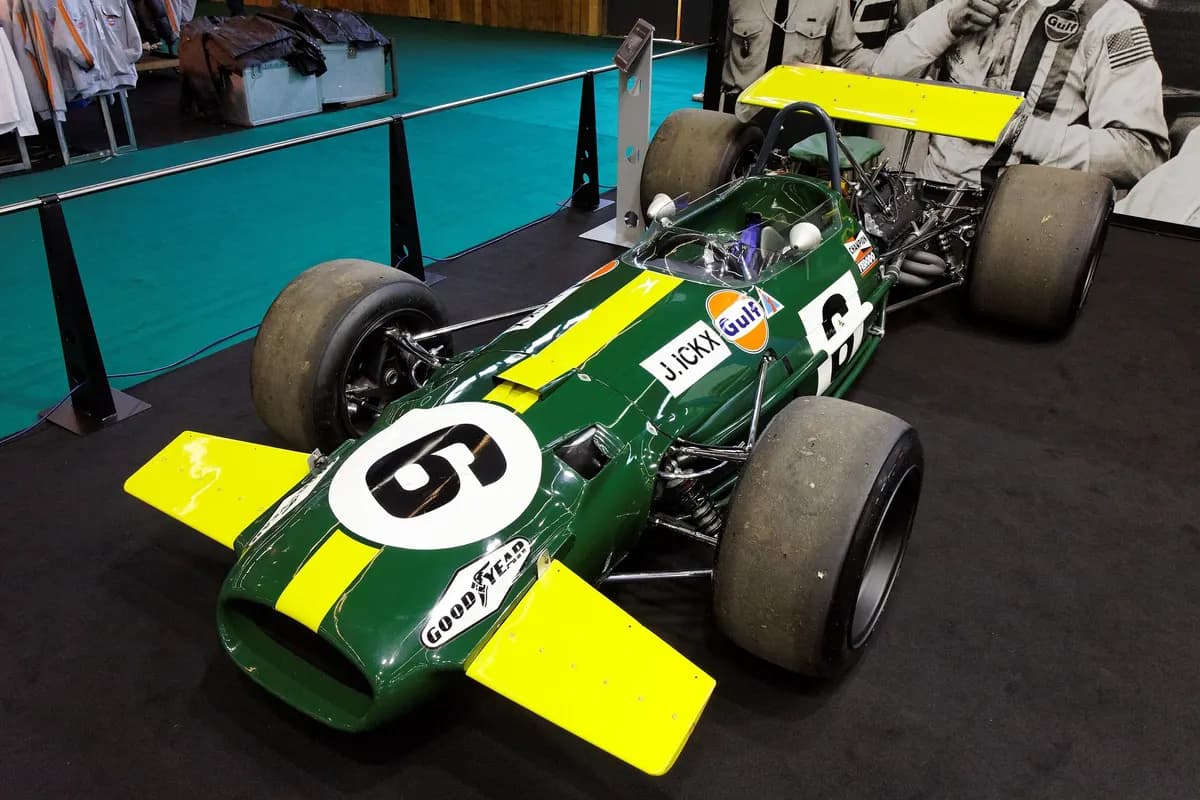
Important: this result belongs to the comparable named above and is not an estimate of the example on display in the museum.
The BT26 belongs to the first generation of 3-litre Formula 1, introduced in 1966. Like every Brabham F1 car of the period, it is built on a tubular steel spaceframe stiffened with stressed panels, at a time when most of its rivals had already moved to the aluminium monocoque. The first monocoque Brabham F1 car would be the 1970 BT33. BT26-3 was driven by Jochen Rindt in 1968 with the Repco engine, then converted to a Cosworth DFV-powered BT26A for 1969. Jacky Ickx won the 1969 Canadian Grand Prix in it, at Mosport.
That Ickx connection matters particularly in Stavelot. In 2025 the museum opened an Espace Jacky Ickx, built around an Ensign Formula 1 car he drove and a large collection of memorabilia.
5. BMW M1
A white BMW M1, presented by the museum as a 1979 car, was photographed in the abbey cellars in April 2018. Its chassis number is not publicly stated.
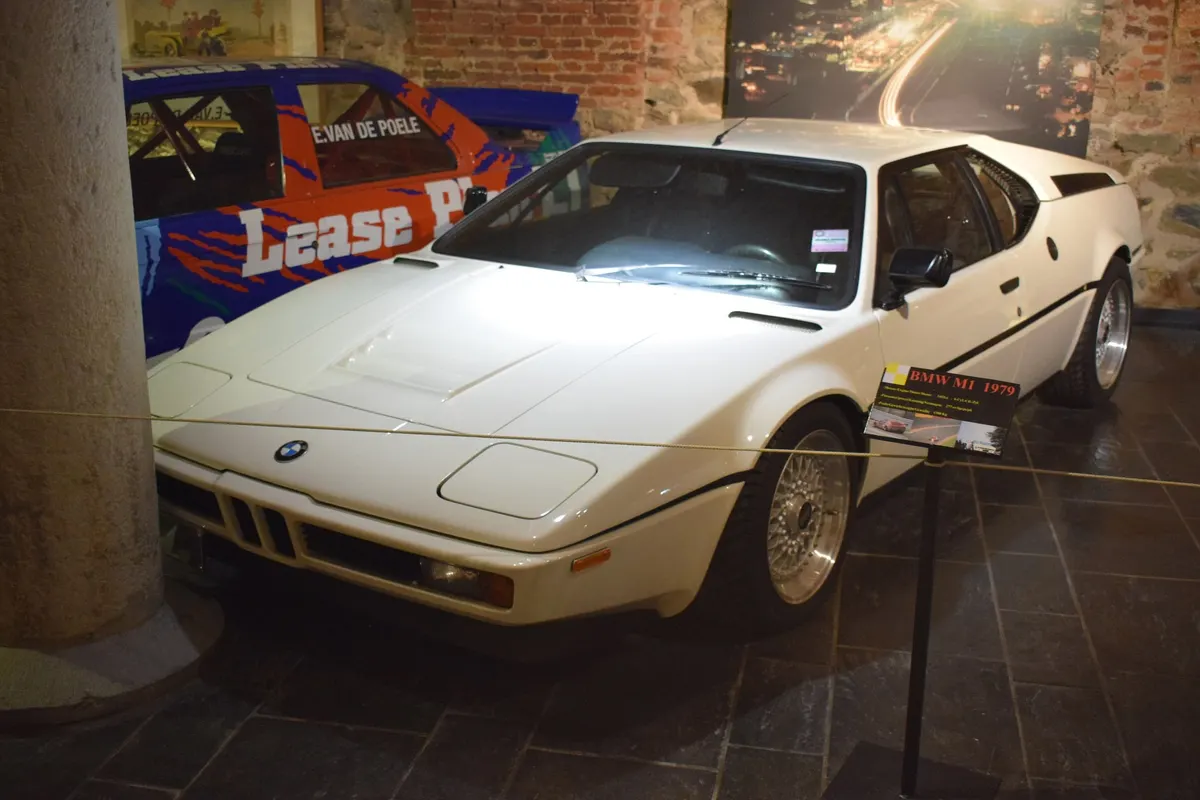
Important: this result belongs to the comparable named above and is not an estimate of the example on display in the museum.
Two weeks later, another 1980 M1 (chassis WBS59910004301180) made £398,750 at RM Sotheby's in London, or about €452,000. The Procar story keeps interest in the model alive; a documented racing M1 belongs to a different market from these two road cars.
6. Alfa Romeo Giulia Sprint GTA
An Alfa Romeo Giulia Sprint GTA, presented as a 1965 car, was photographed in the museum in February 2024. Its chassis number is not publicly stated. The car sold below is a different car, from 1966.
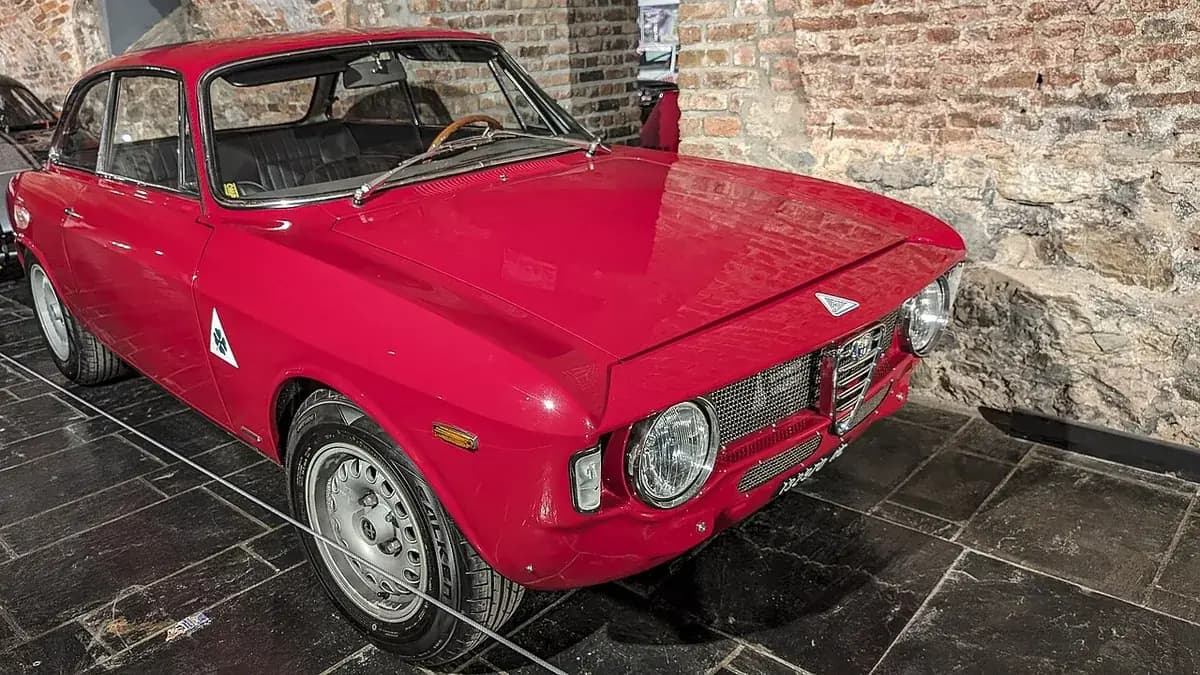
Important: this result belongs to the comparable named above and is not an estimate of the example on display in the museum.
A month earlier, another 1966 GTA (chassis AR 613790) had gone for $140,000 at RM Sotheby's Monterey, with an engine from a Giulia GTC and a bill of sale in place of a title. That is what a missing piece of a car's story costs. Race-prepared GTAs with documented competition history sit above both. For comparable cars, see historic race cars for sale.
7. Ford Capri 3.0 Belga
Of all the cars in the collection, the Ford Capri in Belga colours is the one where provenance matters most. It was photographed in the museum in 2018 and in 2023, and a July 2025 gallery presents it as the winner of the 1979 and 1980 Spa 24 Hours.
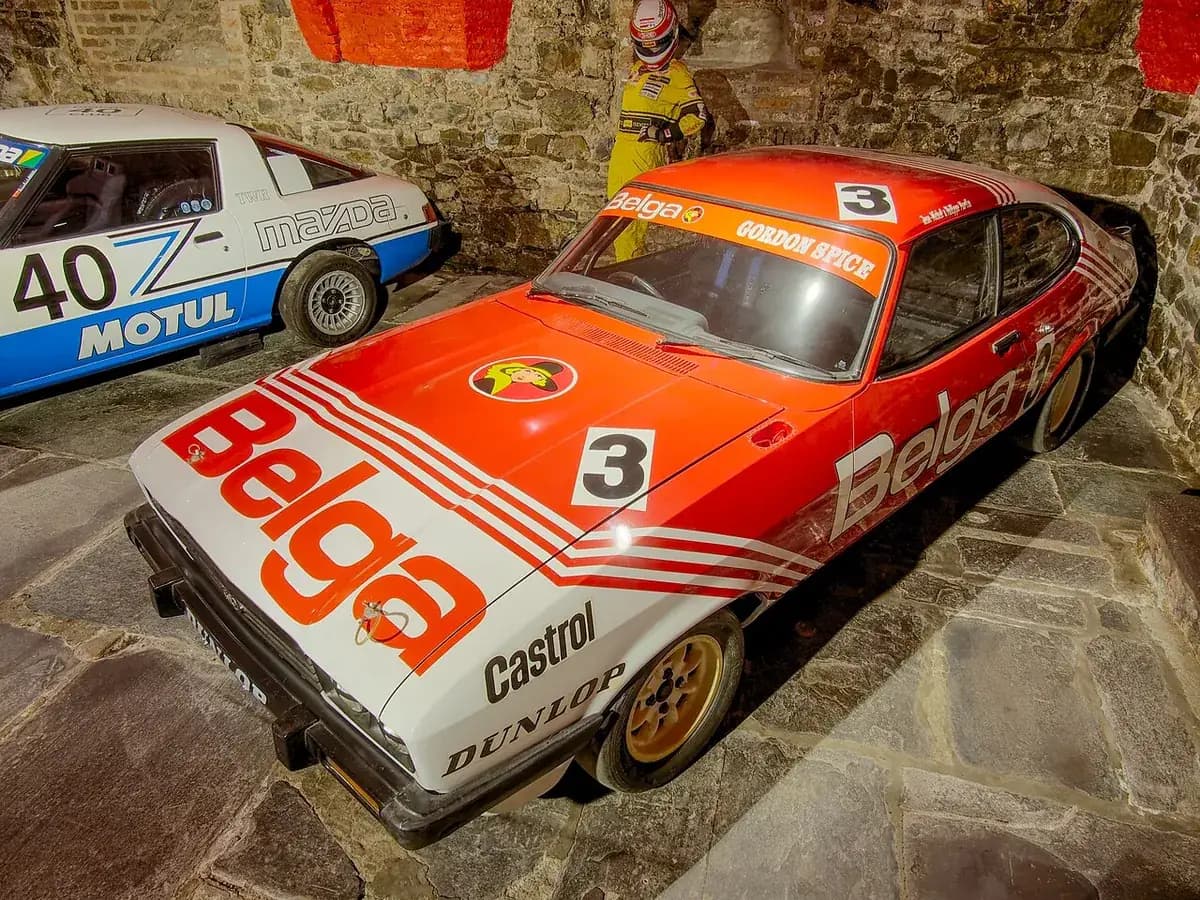
Both races were indeed won by the brothers Jean-Michel and Philippe Martin in a Ford Capri, run by the Belga / Gordon Spice Racing operation (Racing Sports Cars results). The car on display is presented as the double winner of the 1979 and 1980 Spa 24 Hours, but the public sources consulted do not allow the exact identity of the chassis to be confirmed with certainty.
Important: this sale concerns chassis CC13. On its own, it cannot establish the value of the car on display in the museum.
CC13 comes out of the same workshop but is not a winning car: at the 1979 Spa 24 Hours, Gordon Spice and Pierre Semoulin finished fifth in it and set the fastest lap. If the museum's car really is the chassis that won in 1979 and 1980, it is an entirely different asset, and not one that any model-level price band can settle.
8. March 701/1
The museum displays the March 701/1 associated with Chris Amon, recorded on site in 2020 by Endurance-Info and again in the July 2025 gallery. It is arguably the car with the closest historical tie to the circuit outside.
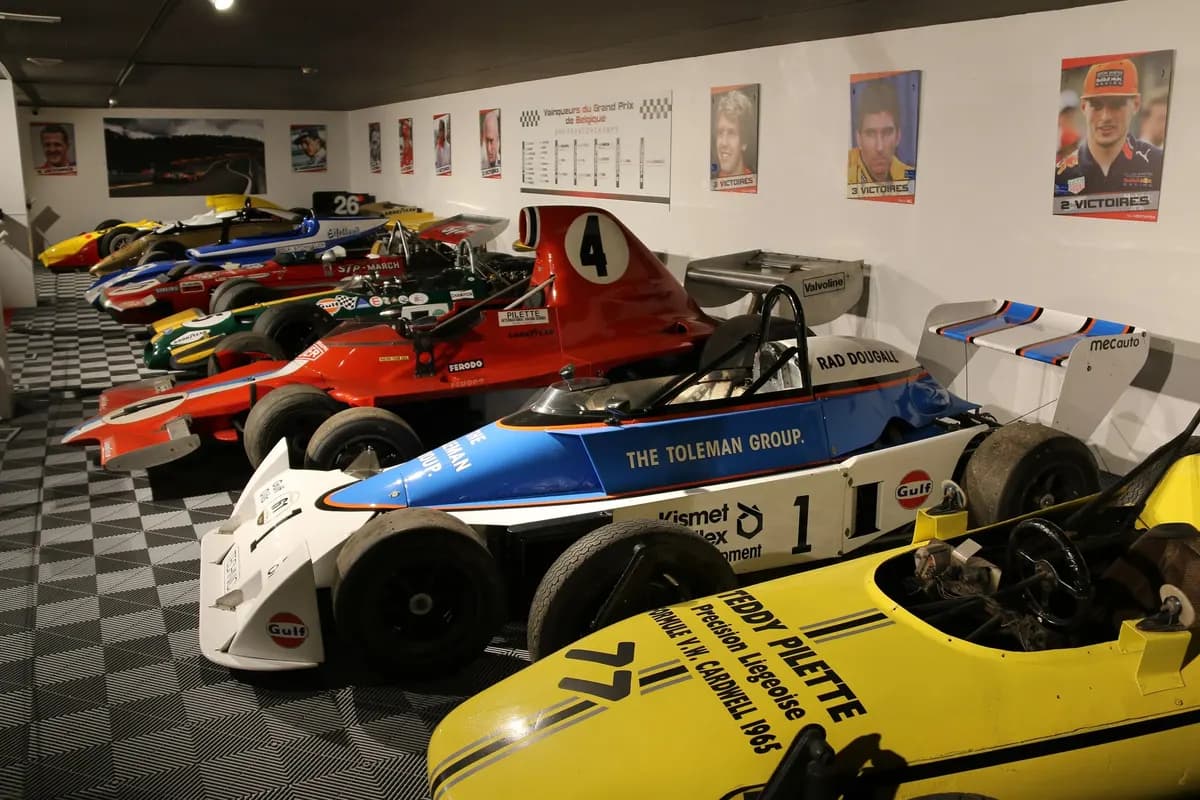
At the 1970 Belgian Grand Prix, on 7 June, Amon had a new chassis carrying the same number as the previous one, 701-1. He qualified third, finished second, 1.1 seconds behind Pedro Rodríguez's BRM, and set the fastest lap of the race in 3:27.4, on lap 27, on the old circuit of roughly 14 km. That lap is the race's lap record, not the outright record for the old circuit: that belongs to Jo Siffert, with 3:14.6 in a Porsche 917 at the 1971 Spa 1000 km. Those six points were Amon's first of 1970.
This is a choice of method, not a gap. A March 701 is a model. The 701/1 that Amon put on the podium at Spa is a chassis, with a history that only an examination of its components and its period papers can assess. Publishing a 2009 sale of an unknown chassis as "the value" of this car would be worse than publishing nothing. Our guide to what drives race car prices goes through the mechanics.
9. Ferrari 365 GTB/4 Daytona
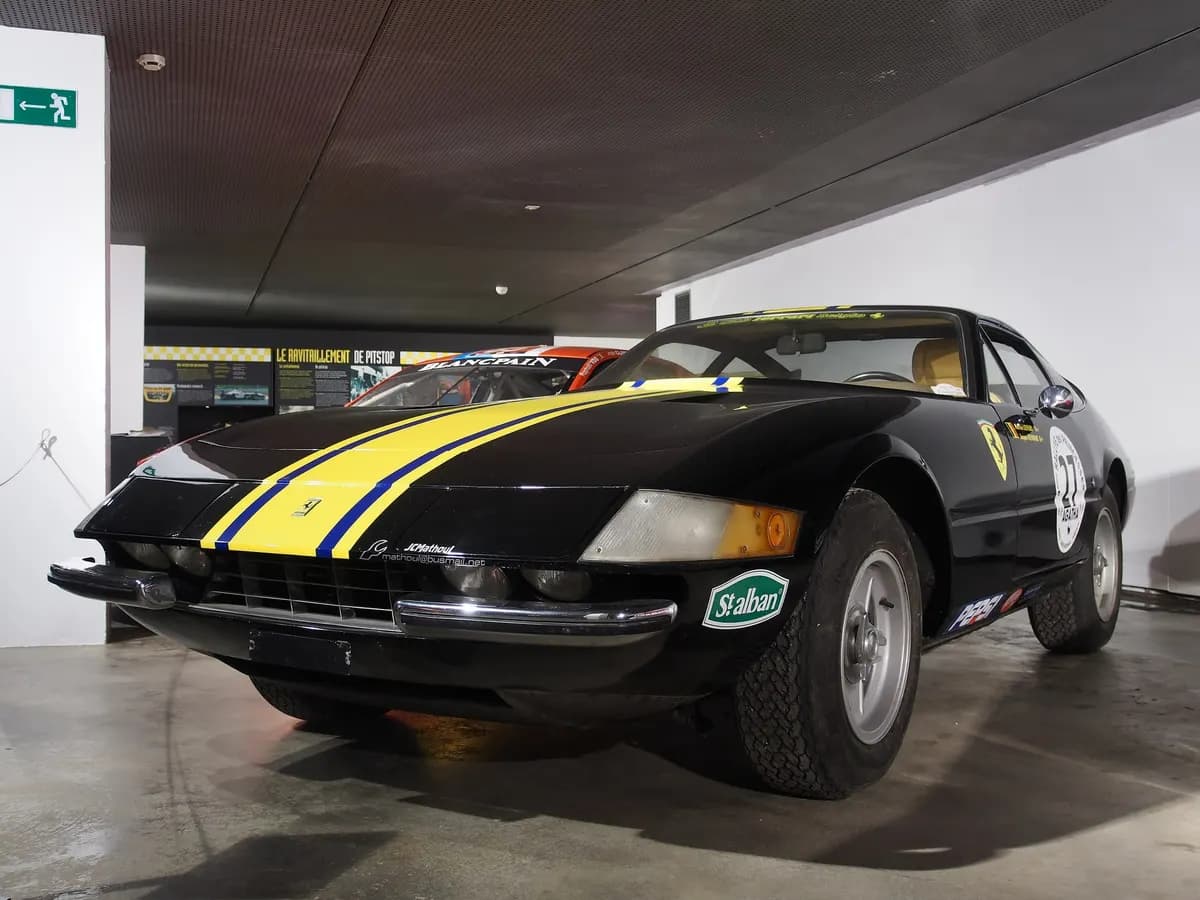
A car presented as a Ferrari 365 GTB/4 Daytona appears in the museum's photographic record. The public sources consulted do not, however, allow its authenticity to be independently confirmed. Photographed in 2018, it is black with yellow and blue stripes and a racing number on the door.
So what is the whole collection worth?
The only official figure is the circuit's: no less than €14 million for 47 cars and 40 motorcycles, in April 2024. We do not recalculate it, and adding up our benchmarks would not replace it. The seven priced comparables in this guide total about €9 million, but they are prices of other cars. The two cars with no benchmark, the March 701/1 and the Daytona, are precisely the ones whose identity weighs most on value. Loans also change the make-up of the collection from one year to the next.
Before you travel
The display is not fixed. Cars leave when a loan ends: a Talbot-Lago T26C photographed in the cellars in 2008 no longer appears in recent sources. If you are coming for one specific car, contact the museum first. It has been housed in the cellars of Stavelot Abbey since it opened in 1984, and the list of vehicles depends on the owners rather than on a permanent catalogue.
If you want to own one
The museum's cars are not for sale, but equivalent cars are. Historic competition cars change hands constantly, and the questions this guide keeps asking (chassis identity, period race record, papers) are exactly the ones to put to a seller.
- Get the chassis number before anything else, and check it against the entry lists of the races it claims.
- Read the FIA HTP and historic papers guide before you pay a provenance premium.
- Budget for inspection, transport and a first season as you would for any race car purchase in Europe.
- If you are buying through a professional, our historic race car dealer guide covers who does this properly.
To look at cars you can actually buy, browse historic race cars for sale, the full range of race cars for sale or, for collectable road cars such as the M1 or the GTA, classic cars for sale. The same treatment applied to Formula 1 and Le Mans is in every F1 world champion's car and what it is worth and Le Mans winners and their auction values.
Sources
Museum and circuit
- Circuit de Spa-Francorchamps: the museum's 40th anniversary (private owners, 47 cars, 40 motorcycles, at least €14 million, opened in 1984)
- Endurance-Info: visit to the museum in 2020 (endurance hall, 1968 Porsche 910, Porsche 962 C, March 701/1)
- Endurance-Info: opening of the Espace Jacky Ickx
- Nordschleife 1927: museum gallery, July 2025
Comparable sales
- RM Sotheby's: 1989 Ferrari F40, chassis ZFFGJ34B000083620, Monaco 2026
- RM Sotheby's: Monaco 2026 sale press release
- Bonhams: Porsche 962 C, chassis 962-155, Spa Classic Sale 2015
- Gooding Christie's: 1967 Porsche 910, chassis 910-020, Pebble Beach 2026
- Bonhams: Brabham BT26/BT26A, chassis BT26-3, Amelia Island 2019
- RM Sotheby's: 1980 BMW M1, chassis WBS59910004301265, Munich 2025
- RM Sotheby's: 1980 BMW M1, chassis WBS59910004301180, London 2025
- Bonhams: 1966 Alfa Romeo Giulia Sprint GTA, chassis 613857, Goodwood Revival 2025
- RM Sotheby's: 1966 Alfa Romeo Giulia Sprint GTA, chassis AR 613790, Monterey 2025
- RM Sotheby's: Ford Capri Group 1 ex-Gordon Spice, chassis CC13, London 2017
- Conceptcarz: March 701, Bonhams Quail Lodge 2009
Race record and technical
- Racing Sports Cars: 1969 Spa 1000 km
- Racing Sports Cars: Philippe Martin's results (1979 and 1980 Spa 24 Hours)
- Old Racing Cars: 1970 Belgian Grand Prix
- Old Racing Cars: Brabham BT33, the first monocoque Brabham F1 car
- Porsche Newsroom: Jo Siffert's 1971 Spa lap record
Images
- Wikimedia Commons, Spa-Francorchamps Racing Museum category: photographs by Paul Hermans, Jean Housen, FrDr and Alf van Beem taken in the museum. The illustrations of the Porsche 962C (Daniel Lu) and the Brabham BT26A (Thesupermat) do not show the museum's cars. Authors and licences are given under each image.
Frequently asked questions
What is the most valuable car in the Spa-Francorchamps museum?
On public sales of comparable cars, the Ferrari F40. A 1989 F40 (chassis ZFFGJ34B000083620) sold for €4,336,250 at RM Sotheby's Monaco on 25 April 2026, among the highest results seen for a standard F40. That price belongs to that car, not to the example on display in Stavelot, and a competition chassis with a Spa record, such as Chris Amon's March 701/1, can matter more to the right buyer than any price guide.
Does the museum own the cars on display?
No. According to the Circuit de Spa-Francorchamps, every vehicle on display belongs to a private owner, some of whom lend it for a fixed period only. The display therefore changes: not every car recorded in 2020 is visible today.
How much is the whole collection worth?
In April 2024 the circuit put the combined value of the 47 cars and 40 motorcycles on display at no less than €14 million. That is the circuit's figure, not an independent appraisal, and it depends on the loans in place at the time.
Are the prices in this article the value of the museum's cars?
No. Each figure is the result of a public sale of a different car of the same model, whose chassis is given. The history, authenticity, specification and race record of the example on display can make it worth a great deal more, or a great deal less.
Can you buy a car from the museum?
Not from the museum. The cars belong to private collectors who lend them; when a loan ends, the car goes back to its owner. Equivalent cars do, however, change hands on the historic race car market.