A European Motorsport Museum Road Trip
Start under the glass arches of Brussels’ Cinquantenaire. Finish beside the Mulsanne Straight. Between them, drive through the Ardennes, stop at Spa and the Nürburgring, cross Stuttgart’s museum district, descend into Ferrari country and turn west for Le Mans.
The complete route is roughly 2,500–2,600 km before travel to the start and home from the finish. Ten days is possible. Twelve to fourteen is better, and sixteen lets you take the best detours without rushing. The reward is not just a sequence of famous cars: it is the contrast between a private loan under Stavelot Abbey, a factory winner in Stuttgart and a working museum object at Le Mans.
Days 1–2: Autoworld Brussels
Where: Parc du Cinquantenaire 11, 1000 Brussels
Official information: Autoworld plan your visit
Autoworld gives the journey its broadest opening chapter: more than 250 vehicles spanning roughly 140 years, then a Sport & Competition zone with Formula 1, GT, rally and single-seater cars.
The competition display is deliberately fluid. Cars from Autoworld’s heritage program appear at events, so a named car is never a guarantee. Officially documented highlights have included the 1953 Cooper-Bristol T23 MkII Formula 2 and the magnesium-bodied 1970 De Tomaso 505/38 Formula 1 car.
Allow at least 90 minutes; two to three hours is more realistic for an enthusiast. Autoworld is normally open daily, with shorter weekday hours than weekends, but check for exceptional closures.
Also in Brussels: the Cinquantenaire is a park as well as a museum quarter; the Royal Military Museum shares the same complex, and its aviation hall is a natural pairing for anyone who also likes aircraft. Belgium’s other motorsport sites, Zolder and Mettet, sit off this route and are worth their own trip only when an event is on.
Drive to Stavelot
Brussels to Stavelot is about 150 km and 1 hour 40 minutes in normal conditions. Traffic leaving Brussels and weather in the Ardennes can add considerably.
Days 3–4: Spa-Francorchamps Circuit Museum
Where: Cour de l’Abbaye 1, 4970 Stavelot
Official information: Spa-Francorchamps Circuit Museum and hours and access
The vaulted cellars of Stavelot Abbey create the most atmospheric stop on the route. Formula 1 cars, endurance machinery, touring cars and Belgian motorcycles sit beneath stone arches only a few kilometers from the circuit.
The official museum names Ferrari, March, Chevron, Porsche and Cooper among the display, but the important phrase is “continually renewed.” Many cars are private loans. A Ferrari F40 photographed last year or a March linked to Chris Amon is not promised for your visit.
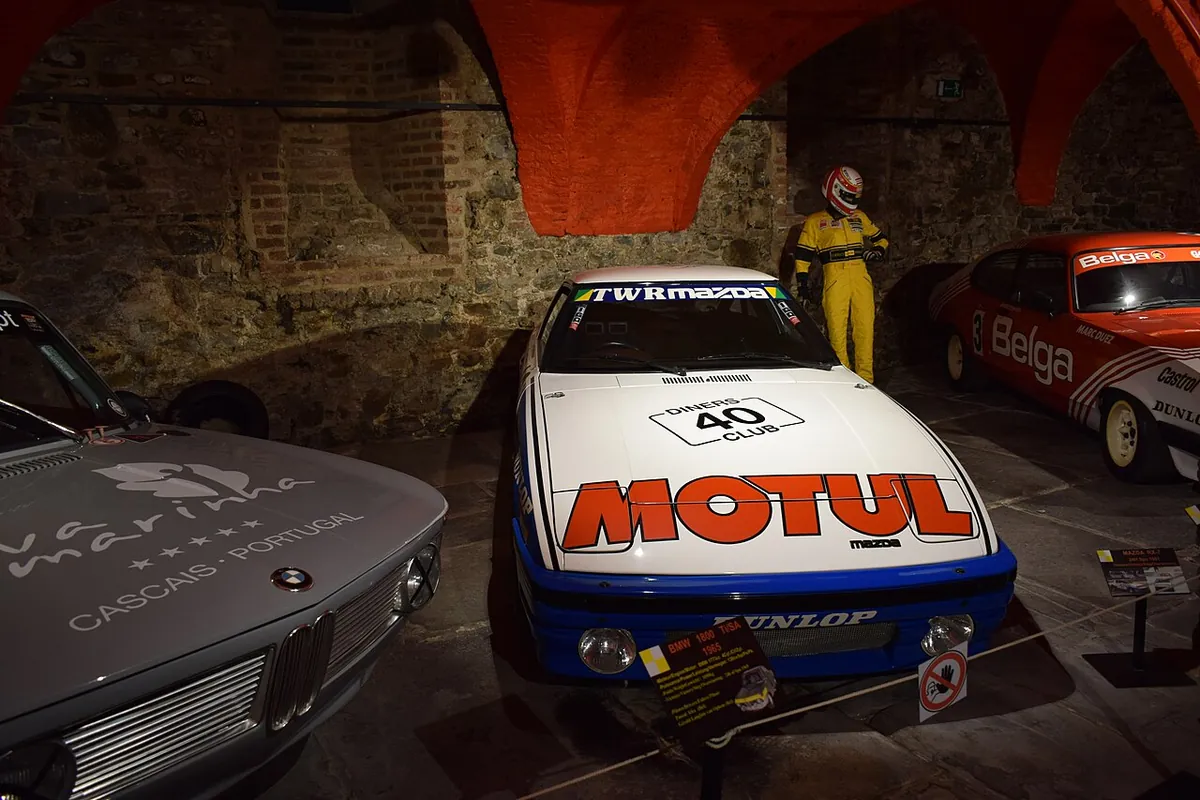
The circuit museum itself takes 30–60 minutes, but the combined abbey museums justify a longer stop. It normally opens Tuesday through Sunday; Mondays are available during some Belgian school holidays. Holiday and local-calendar closures are unusual enough to check rather than memorise.
Use the second day for the circuit itself. The circuit runs guided tours and has public viewing areas when no event is running, but the calendar is crowded, so check before you go. Standing at the bottom of Eau Rouge and looking up the Raidillon is worth the trip on its own.
The old 14 km road circuit is still there in fragments. Parts of the Masta straight and the road through Stavelot are ordinary public roads now, with houses, speed limits and local traffic. Drive them gently for the history. Public roads do not reproduce the old circuit safely, and arrival does not imply track access.
For a deeper look at the collection, see the most valuable cars in the Spa-Francorchamps museum.
Drive to Nürburgring
Stavelot to Nürburgring is about 90 km and 1 hour 25 minutes. The route crosses a border but stays rural; allow for weather and event traffic.
Day 5: Nürburgring, with an important warning
Where: Otto-Flimm-Straße, 53520 Nürburg
Official information: Nürburgring opening hours and ring°werk status
As of October 2026, ring°werk is closed for extensive redevelopment and there is no confirmed reopening date. Do not plan this as a museum day.
Treat Nürburgring as a circuit stop. The info°center, boulevard and circuit experiences operate according to the event and tourist-driving calendars. Construction, race weekends and private bookings can change access. A Nordschleife lap should never be assumed from the fact that the gates are open.
The stop still makes geographic and historical sense between Spa and Stuttgart. It also prevents an article about museum travel from pretending that an old listing is current.
Drive to Stuttgart
Nürburgring to Porscheplatz is about 313 km and just over three hours without major traffic. Build in extra time for the Rhine corridor and Stuttgart approaches.
Day 6: Technik Museum Sinsheim, on the way
Where: Eberhard-Layher-Straße 1, 74889 Sinsheim
Official information: Technik Museum Sinsheim and Formula 1 and motorsport
The usual route to Stuttgart runs along the A6, and Sinsheim sits right beside it. That makes this the easiest detour on the whole trip, and one of the most rewarding. The museum describes its Formula 1 hall as the largest permanent Formula 1 exhibition in Europe. It sits alongside sports and racing cars, a large pre-war collection and, on the roof, Concorde and the Tupolev Tu-144.
Allow three hours and resist the urge to do everything. The F1 hall and the racing sports cars alone can fill a morning. The museum is normally open every day of the year, with longer hours at weekends and on public holidays.
Hockenheim warning: the Hockenheimring is only about 30 km away, but its Motor-Sport-Museum has not reopened since the pandemic and the circuit operator has said it will not. Visit Hockenheim only for the circuit or an event; Sinsheim is the museum stop.
Days 7–8: Porsche Museum
Where: Porscheplatz 1, 70435 Stuttgart-Zuffenhausen
Official information: Porsche Museum hours and prices and exhibition
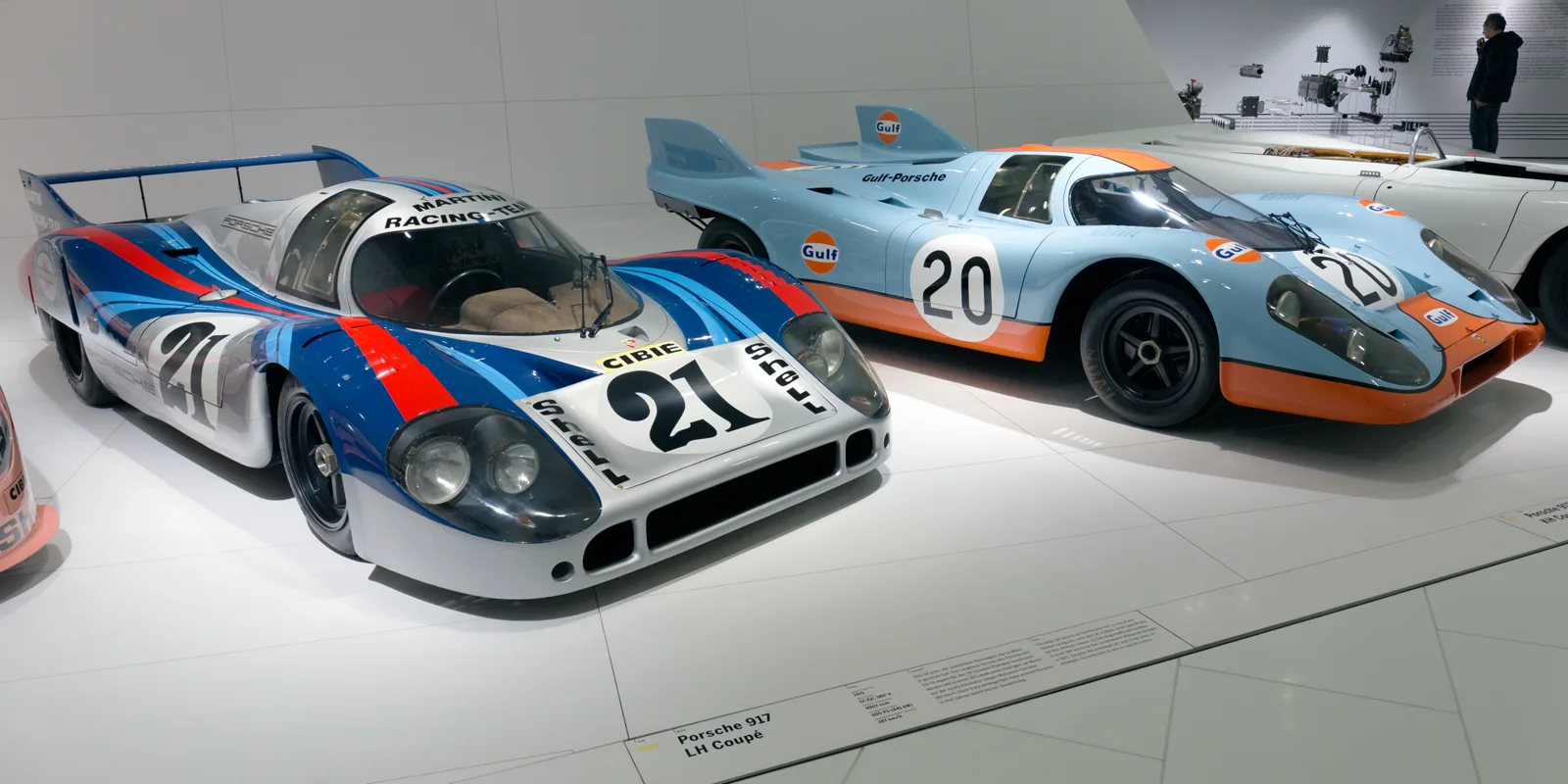
Porsche displays about 95 cars from a collection of roughly 800, including nearly 200 racing cars. That ratio explains both the quality and the rotation.
Look for the 356 SL story behind Porsche’s first international class win at Le Mans, the 917 era, the ceiling-mounted 956 used to explain ground effect, and later 919 Hybrid machinery. The “Raceborn – 75 Years of Porsche Motorsport” exhibition is scheduled through 17 January 2027, but individual cars can still leave for events.
The museum normally opens Tuesday through Sunday, 09:00–18:00, and closes on Mondays. Allow two to three hours at minimum. For the chassis and market stories behind the display, read the Porsche Museum’s greatest racing cars and their values.
Days 7–8: Mercedes-Benz Museum
Where: Mercedesstraße 100, 70372 Stuttgart
Official information: Mercedes-Benz Museum visitor information and Silver Arrows gallery
The banked “Silver Arrows – Races & Records” gallery is the strongest racing counterpoint to Porsche. Officially documented cars include the W 25, W 125, W 154, one-race W 165 and post-war W 194 300 SL racer.
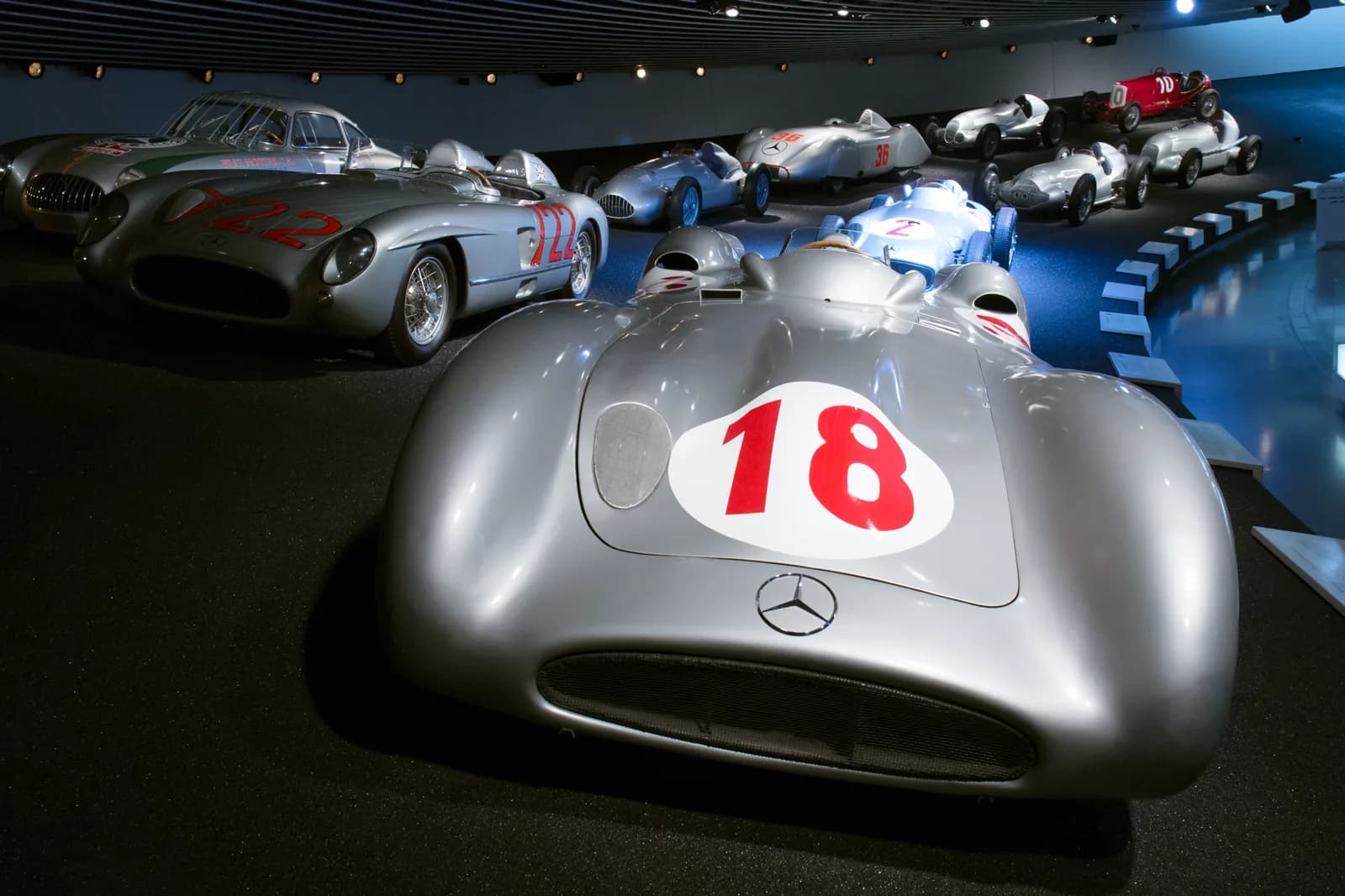
It normally opens Tuesday through Sunday, 09:00–18:00, with Monday closure. The nearby stadium can complicate road access during football matches and major events.
The Porsche and Mercedes museums are only about 9–14 km apart. That can be 15 minutes or more than 30 in traffic. Both can fit into one determined day, but one day each produces a much better trip.
On a Monday in Stuttgart: both factory museums are normally closed, so this is the day for Motorworld Region Stuttgart in Böblingen. It is housed in a former airport, with classic and sports-car dealers, specialist workshops and glass car storage you can walk past. It is a working marketplace, not a curated museum, which makes it a useful reality check on what cars like these actually sell for.
Day 9: Cross the Alps
Stuttgart to Modena is approximately 600–700 km and 7–9 hours, depending on whether the live route sends you through Switzerland or Austria. Vignettes, tolls, weather and seasonal closures change the correct choice.
Do not treat this as a fixed-distance transfer. Check winter-equipment rules, Alpine forecasts and border traffic. Splitting the drive is sensible if the trip is about the road as much as the museums.
If you do split it, the Swiss route has the best stops. Each of the three below adds roughly half a day.
Detour: Cité de l’Automobile, Mulhouse
Official information: Cité de l’Automobile
From Stuttgart, swing west to Mulhouse (about 2½ hours) before turning south through Basel. The Schlumpf brothers’ collection, now France’s national car museum, holds over 400 vehicles and the largest Bugatti collection in the world. Its racing section runs from Grand Prix Bugattis to later single-seaters and sports cars. It deserves at least two to three hours. Winter hours are shorter, so check the official site.
Detour: Monza
Official information: Monza Circuit Experience
The Gotthard route comes down past Lake Como towards Milan, and Monza is just off it. The Autodromo sits inside Monza Park, and the circuit offers guided tours by minibus, car or bicycle. The best of them include the old banking, the Sopraelevata, whose concrete is steeper than photographs suggest. Tours depend on the event calendar, so book ahead.
Detour: Museo Mille Miglia, Brescia
Where: Viale della Bornata 123, 25135 Brescia
Official information: Museo Mille Miglia
The Mille Miglia started and finished in Brescia. Its museum, set in the former monastery of Sant’Eufemia, tells the story of the race from 1927 to 1957 and of the modern revival, with cars, film and memorabilia. It is about an hour east of Monza; from Brescia, Modena is roughly two hours. The museum normally opens daily, 10:00–18:00.
Day 10: Museo Enzo Ferrari, Modena
Where: Via Paolo Ferrari 85, 41121 Modena
Official information: Museo Enzo Ferrari and tickets and packages
MEF combines Enzo Ferrari’s birthplace and his father’s workshop with a modern exhibition hall. It is the better place for the founder, engines and the development of Scuderia Ferrari rather than a guaranteed line of championship chassis.
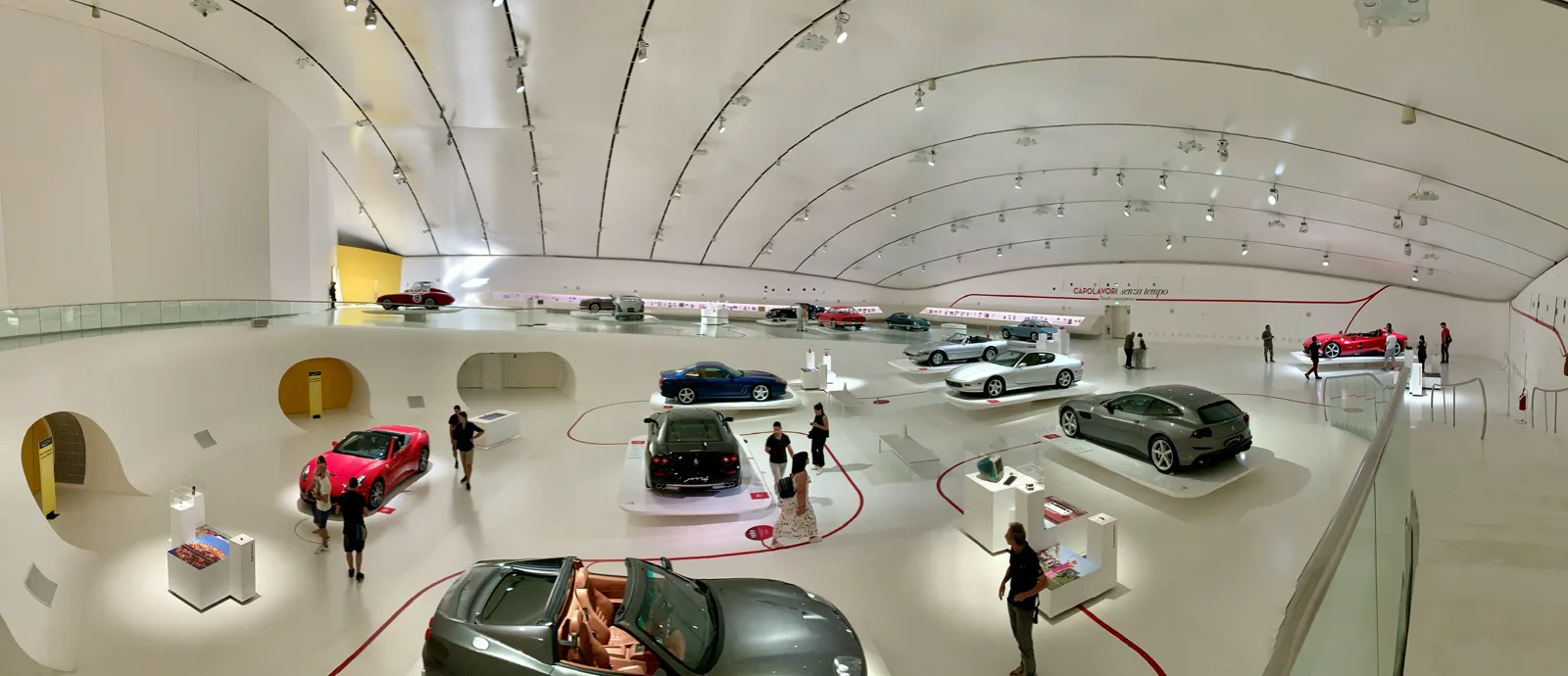
Exhibitions rotate. A recent livery launch or temporary competition car is not proof of a permanent display. The museum opens daily with seasonal hours and closes on 25 December and 1 January.
Day 10: Museo Ferrari, Maranello
Where: Via Alfredo Dino Ferrari 43, 41053 Maranello
Official information: Museo Ferrari Maranello
Maranello is the more competition-focused Ferrari visit, with Formula 1 cars, sports prototypes and racing GTs. Ferrari’s World Championship presentation is the draw; the exact cars change.
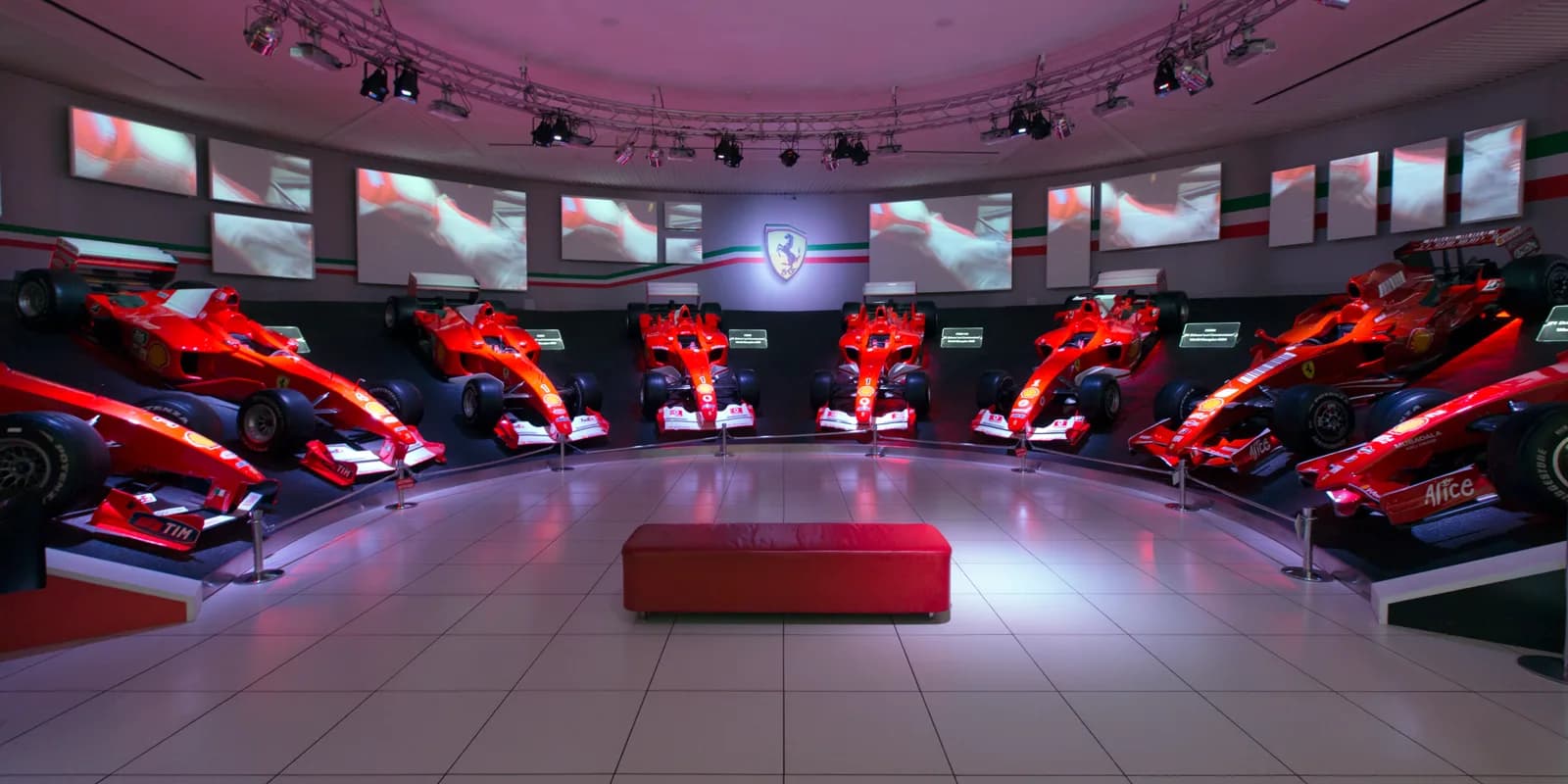
Modena and Maranello are about 20 km or 20–30 minutes apart. Ferrari offers combined tickets that must be used within the stated window. Ferrari suggests 60–90 minutes per museum; a full day allows both without turning the visit into a sprint.
Day 11: The rest of the Motor Valley
Official information: Motor Valley museums and collections
Ferrari is only half of what is here. Emilia-Romagna markets itself as the Motor Valley, and a second day lets you choose two or three of these:
| Stop | Where | Why go | Booking |
|---|---|---|---|
| Museo Automobili Lamborghini | Sant’Agata Bolognese | Road cars, concept cars and Squadra Corse racing cars; factory tours available separately | Recommended; factory tours must be booked |
| Museo Ducati | Borgo Panigale, Bologna | Ducati’s racing motorcycles, from early Grand Prix bikes to World Superbike and MotoGP | Can be combined with Lamborghini on a joint ticket with a shuttle |
| Museo Horacio Pagani | San Cesario sul Panaro | Zonda and Huayra history; tours can include the production line | Booking required |
| Collezione Umberto Panini | Near Modena | A private Maserati collection, including racing cars | Check opening days and book ahead |
| Dallara Academy | Varano de’ Melegari, near Parma | Racing-car engineering, with chassis from Formula 3 to IndyCar | Check opening days |
| Autodromo Enzo e Dino Ferrari | Imola | The Grand Prix circuit, with the Senna and Ratzenberger memorials at Tamburello and Villeneuve | Check the event calendar |
Most of these work on fixed visiting slots, not walk-in museum hours. Book before you arrive in the region, not on the day.
Days 12–13: The long westbound transfer
Maranello to Le Mans is about 1,300 km and 13–14 hours before serious traffic. Split it over two days, or three if you want the stops below. The natural line runs through Turin and the Fréjus tunnel to Lyon, and it passes the best museums.
This is the least elegant leg on the map and the reason a ten-day version feels compressed. Avoid promising a scenic Alpine route and a relaxed museum schedule in the same day.
Stop: MAUTO, Turin
Where: Corso Unità d’Italia 40, 10126 Turin
Official information: MAUTO
Turin was Italy’s car capital, and its national automobile museum is the best place to see the Italian industry as a whole, not just one brand. Expect Fiat, Lancia and Alfa Romeo alongside the coachbuilders and designers, plus competition cars from the collection. Exhibitions rotate here too. MAUTO opens every day, but on Mondays only in the morning, and allow about two hours. Maranello to Turin is around 330 km.
Stop: Musée Henri Malartre, Lyon
Official information: Musée de l’automobile Henri Malartre
North of Lyon, in a château above the Saône, this municipal museum is a quieter stop: early cars, motorcycles, bicycles and a few competition cars. It is mainly worth visiting for the early years of motoring, not for racing. It normally opens Wednesday to Sunday, so check the day before you plan around it.
Day 14: M24 – Motorsport Museum, Le Mans
Where: 9 Place Luigi Chinetti, 72100 Le Mans
Official information: M24 practical information and current collection
M24 reopened in expanded form in May 2026. Its 8,600 m² cover Le Mans, Formula 1, rally, IndyCar, Can-Am and motorcycle racing.
Official collection highlights include the 1924 Bentley 3 Liter—the oldest surviving Le Mans winner—a Ferrari 166 MM, the unique Ferrari 712 Can-Am and Mazda 787B chassis 04. That Mazda is a non-running presentation car painted like the 1991 winner, not the winning chassis in Hiroshima.
The museum normally opens daily except 25 December and 1 January, with longer hours from May through September. Race-week access and parking can be completely different. Allow at least two hours.
Give the circuit itself the rest of the day. The museum sits at the main entrance to the Bugatti circuit, and on non-event days the circuit runs guided tours of the pits, the media center and the podium. Most of the 13.6 km 24-hour lap is ordinary public road for the rest of the year. You can drive the Mulsanne Straight, the Hunaudières on the D338, and pass Mulsanne corner and Arnage. Do it at legal speed and with local traffic. On race week, none of this applies.
Read the most valuable cars in the Le Mans M24 museum before the visit, then use Le Mans winners and their auction values to separate the models from the winning chassis.
After Le Mans: two more ways to finish
West: Manoir de l’Automobile, Lohéac
Where: 4 rue de la Cour Neuve, 35550 Lohéac
Official information: Manoir de l’Automobile
Under 200 km west of Le Mans, south of Rennes, a manor house holds one of France’s largest private car collections. There are around 400 vehicles, from pre-war classics to modern racing cars, with a strong French competition thread. The Lohéac circuit next door is a major rallycross venue. The museum normally opens Tuesday to Sunday with a lunch break, and every day in July and August.
East: the Reims-Gueux pits, on the way home
If Brussels is home, drive back via Reims. About 8 km west of the city on the D27, the pits, grandstands and timing tower of the Reims-Gueux Grand Prix circuit still stand by the road. Volunteers from Les Amis du Circuit de Gueux have restored them, and the site is listed as a historic monument. It costs nothing but a roadside stop. Parts of the grandstands are still fragile, so stay out of anywhere that is fenced off. Le Mans to Reims is about 400 km, and Reims to Brussels about 220 km.
Optional detours at a glance
| Detour | Fits between | Extra time | Best for |
|---|---|---|---|
| Technik Museum Sinsheim | Nürburgring and Stuttgart | Half a day | Formula 1 cars |
| Motorworld, Böblingen | Stuttgart, on a Monday | 1–2 hours | Market reality check |
| Cité de l’Automobile, Mulhouse | Stuttgart and the Alps | Half a day | Bugatti and pre-war Grand Prix cars |
| Monza | Alps and Modena | Half a day | The banking and the circuit |
| Museo Mille Miglia, Brescia | Monza and Modena | 2–3 hours | Road racing history |
| Lamborghini, Ducati and Pagani | Around Modena | One day | The rest of the Motor Valley |
| MAUTO, Turin | Maranello and Lyon | Half a day | The Italian industry |
| Manoir de l’Automobile, Lohéac | After Le Mans | Half a day | French competition cars |
| Reims-Gueux | Le Mans and Brussels | 1 hour | A preserved Grand Prix pit straight |
What the trip costs
The route price depends more on season and car than on museum tickets. Budget for:
- 2,500–2,600 km of fuel;
- French and Italian tolls;
- Swiss or Austrian motorway charges if the selected Alpine route requires them;
- 10–15 nights;
- city parking in Brussels, Stuttgart and Modena;
- race-week accommodation premiums at Spa, Nürburgring or Le Mans;
- breakdown and travel cover valid across every country on the route.
An old competition car makes a romantic road-trip companion and a poor default. Emissions zones, security, luggage and 1,300 km transfer days favour a dependable road car.
If you have only seven days
Cut Italy or Le Mans; do not attempt everything faster.
The strongest compact loop is Brussels → Stavelot → Nürburgring → Stuttgart → Brussels. It preserves four distinct museum styles and removes the two longest transfers.
The strongest southern week is Stuttgart → Mulhouse → Monza → Brescia → Modena → Maranello, with two days in the Motor Valley for the Lamborghini, Ducati and Pagani museums.
Planning checklist
- Avoid placing Stuttgart on a Monday; both major museums normally close. If you cannot, use it for Motorworld.
- Check ring°werk’s status rather than copying an old itinerary.
- Search the event calendars for Spa, Nürburgring and Le Mans before booking hotels.
- Confirm seasonal tires, vignettes, toll tags and emissions-zone requirements for the actual car.
- Contact a museum if one specific chassis is the purpose of the trip.
- Keep one buffer day for Alpine weather, traffic or a museum closure.
- Book the Motor Valley factory museums and the circuit tours at Monza and Le Mans in advance; most run on fixed slots.
The museum cars are not generally for sale, but equivalents are. Browse historic race cars for sale and the wider race car market—then use a transporter for the racing car and a road car for this itinerary.
Sources
- Autoworld visitor information
- Spa-Francorchamps Circuit Museum
- Nürburgring opening hours
- Nürburgring ring°werk status
- Porsche Museum visitor information
- Mercedes-Benz Museum visitor information
- Ferrari museum tickets, hours and packages
- M24 practical information
- Technik Museum Sinsheim: Formula 1 and motorsport
- Hockenheimring: Motor-Sport-Museum closure
- Cité de l’Automobile, Mulhouse
- Monza Circuit Experience
- Museo Mille Miglia
- Motor Valley museum visits
- Lamborghini and Ducati joint museum experience
- Musée Henri Malartre (City of Lyon)
- Manoir de l’Automobile, Lohéac
- Driving distances are planning estimates. Recalculate every leg with live traffic, weather and the selected Alpine route before departure.
Frequently asked questions
How long does the European motorsport museum road trip take?
Allow 10 days at minimum, 12–14 days comfortably, and up to 16 if you add the detours. The route is approximately 2,500–2,600 km from Brussels to Le Mans via Stavelot, Nürburgring, Stuttgart, Modena and Maranello.
Which museums are included?
Autoworld Brussels, the Spa-Francorchamps Circuit Museum, Nürburgring as a circuit stop, the Porsche and Mercedes-Benz museums in Stuttgart, Museo Enzo Ferrari, Museo Ferrari Maranello and M24 at Le Mans.
Is the Nürburgring museum open?
No. As of October 2026, ring°werk is closed for extensive redevelopment with no confirmed reopening date. Treat Nürburgring as a circuit stop and check its official site before traveling.
Can the Porsche and Mercedes-Benz museums be visited in one day?
Yes, but it is rushed. They are only around 9–14 km apart, yet each deserves several hours and both normally close on Mondays. One full day is the minimum; one day each is better.
Which detours are worth adding to the route?
The best value detours are the Technik Museum Sinsheim's Formula 1 hall on the way to Stuttgart, the Cité de l'Automobile in Mulhouse on the Swiss route south, Monza and the Mille Miglia Museum in Brescia, the Lamborghini, Pagani and Ducati museums around Modena, MAUTO in Turin on the way west, and the old Reims-Gueux pits on the drive home.
Is the Hockenheimring museum open?
No. The circuit operator has said the Motor-Sport-Museum will not reopen after its pandemic closure. Hockenheim can still be a circuit stop, and Sinsheim, about 30 km away, is the better museum visit.
Do the museums always display the cars named in this guide?
No. Competition cars rotate, leave for events and arrive as temporary loans. Check current exhibition pages and contact the museum if one specific chassis is the reason for your journey.